
What Product Developers Should Ask Before Choosing an Omega-3 Ingredient
Selecting an omega-3 ingredient can appear straightforward.
A formulator identifies the desired EPA and DHA level, reviews a specification sheet, compares pricing, and chooses a supplier.
In practice, however, omega-3 ingredient selection is considerably more complex.
EPA and DHA concentration are important, but they are only part of the decision.
A successful ingredient must also remain stable, process correctly, perform in the intended application, and deliver consistent quality from batch to batch.
For product developers, the right questions can prevent expensive reformulation problems later.
1. What exactly is the EPA and DHA target?
A specification should define more than “high omega-3.”
The requirement may involve:
- minimum EPA
- minimum DHA
- total EPA + DHA
- a specific EPA:DHA ratio
- a target amount per serving
- a target amount per gram of finished ingredient
These details determine whether an ingredient is truly suitable.
For example, two products may contain similar total omega-3 levels but have very different EPA and DHA distributions.
That difference can completely change how useful the ingredient is for a particular formulation.
2. What form of omega-3 is being supplied?
Omega-3 concentrates are available in different chemical forms, commonly including triglyceride and ethyl ester forms.
The selected form can influence processing strategy, finished-product positioning, and commercial requirements.
Product developers should know exactly what they are receiving rather than treating all omega-3 oils as interchangeable.
3. What is the oxidation status?
EPA and DHA are highly unsaturated fatty acids and are naturally sensitive to oxidation.
This makes freshness and handling extremely important.
Relevant analytical measurements may include peroxide value, anisidine value, and other oxidation-related parameters depending on the material.
The objective is not simply to determine whether an oil appears acceptable at the time of receipt.
The goal is to understand whether the ingredient has sufficient quality and stability for manufacturing, storage, distribution, and shelf life.
4. How was the ingredient processed?
Manufacturing conditions can have a major effect on sensitive oils.
Important questions include:
- Was the oil exposed to high temperatures?
- Was oxygen exposure controlled?
- Was the process rapid or prolonged?
- Was the material subjected to aggressive drying conditions?
- Were protective measures used during conversion and packaging?
A high-quality starting oil can lose value if the manufacturing process introduces unnecessary stress.
5. What carrier system is used in the powder?
For powdered omega-3 ingredients, the carrier system is a critical part of the formulation.
The carrier can influence:
- powder flow
- dispersibility
- stability
- bulk density
- ingredient declaration
- compatibility with other components
It is therefore important to understand not only the omega-3 portion of the ingredient but also the material surrounding and supporting the oil.
6. What is the oil loading?
Oil loading determines how much actual oil is present in the finished powder.
This has both nutritional and economic implications.
If one powder contains substantially more oil than another, a manufacturer may require less finished powder to deliver the same EPA and DHA dose.
However, higher oil loading must still be balanced with stability, powder handling, flow characteristics, and application performance.
The highest possible loading is not necessarily the best formulation.
The correct loading is the one that delivers the required potency while maintaining a usable ingredient.
7. Does the ingredient work in the actual finished product?
This is where laboratory specifications meet commercial reality.
An ingredient may perform perfectly in isolation but behave differently when added to:
- beverage powders
- protein formulations
- functional foods
- nutritional supplements
- pet products
- clinical nutrition products
Potential issues may include poor dispersion, flavor interaction, separation, clumping, oxidation, or incompatibility with other ingredients.
For this reason, application testing is an important part of the development process.
8. Are the analytical methods appropriate?
A COA is only as useful as the methods behind the numbers.
Product developers should understand how key values are measured and whether the analytical methods are suitable for the specific material.
This is especially important for fat-containing powders, where extraction and analytical technique can influence reported results.
Method consistency is important when comparing supplier data, internal testing, and third-party laboratory results.
9. How consistent is the material from lot to lot?
Commercial production requires repeatability.
The ingredient approved during development should be representative of the ingredient supplied during routine production.
That requires control over:
- raw material sourcing
- manufacturing conditions
- analytical specifications
- packaging
- storage
- release testing
Lot-to-lot consistency is often one of the most important differences between a laboratory sample and a truly commercial ingredient.
10. Is the supplier designing for the application or simply selling a standard ingredient?
This final question can make a significant difference.
Some applications can use a standard omega-3 specification.
Others require a specific EPA:DHA ratio, oil loading, carrier system, sensory profile, or functional characteristic.
In these cases, the supplier should understand the end product rather than simply provide an existing catalog item.
Choosing the Right Omega-3 Ingredient
The best omega-3 ingredient is not automatically the one with the highest EPA or DHA level.
It is the ingredient that combines:
- appropriate potency
- suitable chemical form
- controlled oxidation
- appropriate processing
- functional carrier selection
- practical oil loading
- reliable testing
- application compatibility
- consistent commercial production
For product developers, omega-3 ingredient selection should begin with the finished product.
Once the intended application is clearly understood, the ingredient can be evaluated based on how well it supports that objective.
At NPRI-O2P, our approach to oil-to-powder development begins with the end application and works backward to the appropriate ingredient design.
That approach helps ensure that the omega-3 ingredient is not only nutritionally suitable, but commercially usable.
NPRI-O2P, LLC
Oil-to-Powder Technology for Nutraceutical, Food, Beverage and Pet Nutrition Applications
o2pus.com
Need Help With Your Formulation?
Whether you’re developing a new oil powder, improving product stability, or solving formulation challenges, our technical team is ready to help. Contact us for formulation guidance, product recommendations, or sample requests.
Recommended Technical Articles
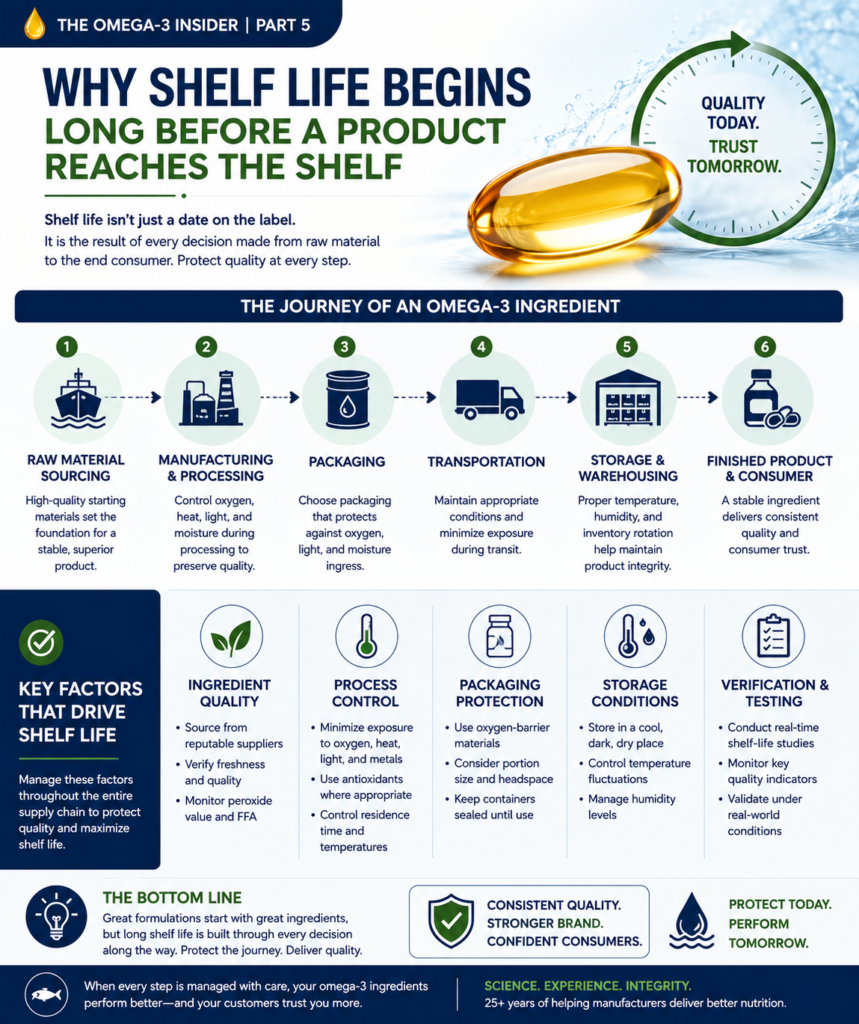
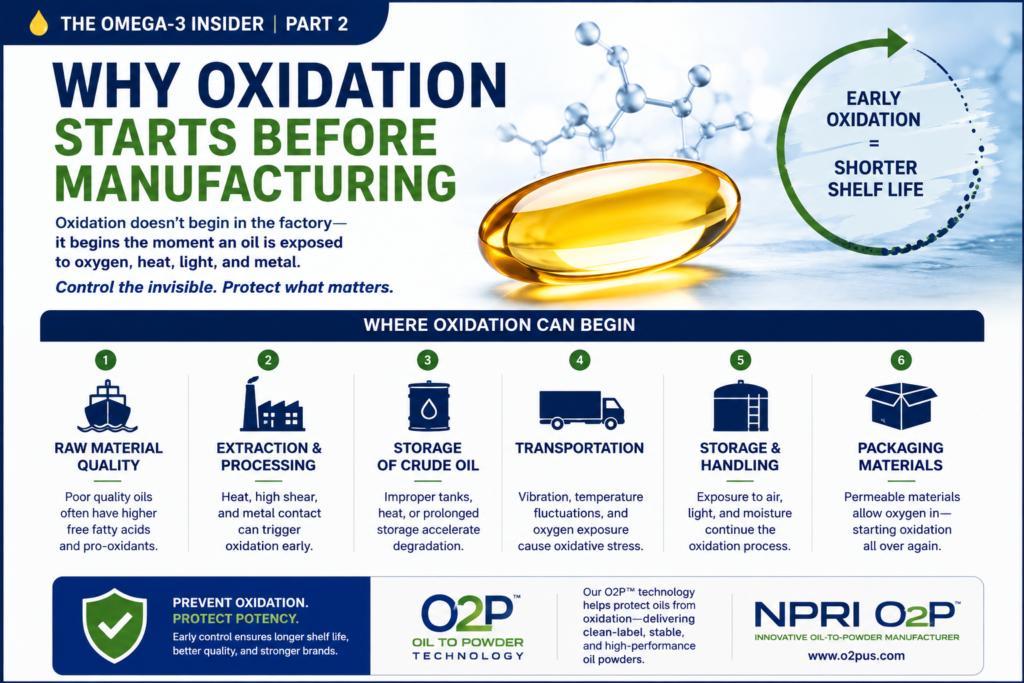
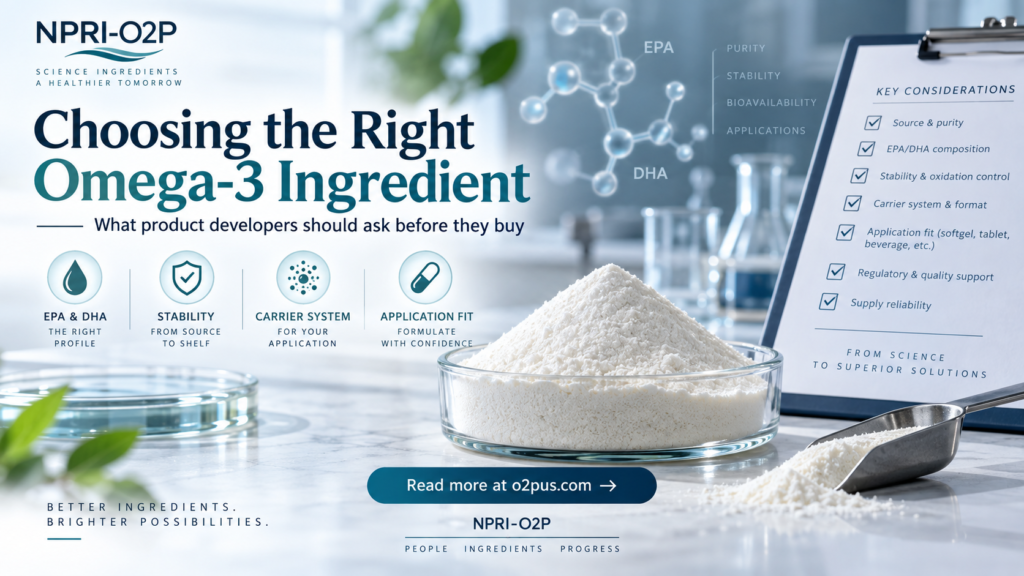
Why Shelf Life Begins Long Before a Product Reaches the Shelf
How O2P™ Technology Protects Oils from Oxidation
Shelf life begins long before a finished product reaches the consumer. Learn how raw material quality, manufacturing, packaging, storage, and transportation all contribute to product stability and long-term performance.
Oxidation begins long before oils reach the manufacturing line. Learn how raw material quality, processing, storage, transportation, and oxygen exposure can silently reduce stability, potency, and shelf life.
Learn the key questions product developers should ask when selecting an omega-3 ingredient, including EPA and DHA specifications, oxidation, processing, oil loading, carrier systems and application compatibility.
