
Omega-3 Is Proven. The Delivery Format Is Still Evolving.
Omega-3 fatty acids are hardly a new ingredient.
EPA and DHA have been used for decades in dietary supplements, functional nutrition and animal nutrition products. Consumers recognize omega-3, formulators understand its value, and the category has become well established around the world.
Yet one important part of the omega-3 market is still evolving:
How should omega-3 be delivered?
For many years, the answer was relatively straightforward. Fish oil was sold primarily as a liquid or encapsulated in a softgel.
Those formats remain important, but product development has expanded far beyond them.
Today, manufacturers are increasingly exploring omega-3 for applications such as powdered dietary supplements, stick packs, sachets, beverage mixes, functional foods, meal replacements, sports nutrition products and pet nutrition formulations.
That creates a different set of technical challenges.
The Challenge Is No Longer Simply Finding Omega-3
A formulator working with a liquid fish oil already has an established ingredient.
The challenge begins when that oil needs to become part of a dry formulation.
EPA and DHA are highly unsaturated fatty acids. That characteristic contributes to their nutritional value, but it also makes them sensitive ingredients that require careful handling.
When converting an omega-3 oil into powder, manufacturers must consider several factors:
- Protection of the oil during processing
- Oxidative stability
- EPA and DHA retention
- Odor and taste management
- Powder flow characteristics
- Dispersibility
- Carrier selection
- Final oil concentration
- Compatibility with the intended finished product
A powder therefore should not be judged only by whether it contains omega-3.
The more important question is:
What happened to the oil while it was being converted into powder?
Processing Conditions Matter
Sensitive oils can be affected by heat, oxygen and processing conditions.
This is particularly important for highly unsaturated oils containing EPA and DHA.
When evaluating an omega-3 powder, product developers should consider not only the starting oil specification, but also the processing technology used to convert that oil into its final powdered form.
The objective should be straightforward:
Preserve the characteristics of the original oil as much as possible while creating a functional dry ingredient.
This becomes even more important when companies begin with premium or proprietary omega-3 oils that have been carefully formulated to achieve a specific EPA profile.
A manufacturer may invest significantly in producing a high-quality oil only to have its characteristics altered during the powder-conversion process.
The conversion technology therefore becomes part of the ingredient-quality equation.
Powder Creates New Product Possibilities
The growing interest in powdered omega-3 is not necessarily about replacing softgels.
It is about expanding what manufacturers can do with EPA and DHA.
A stable, functional omega-3 powder can allow formulators to introduce these fatty acids into product formats that would otherwise be difficult to manufacture with liquid oil.
Potential applications include:
- Nutritional drink powders
- Stick packs and sachets
- Protein and meal-replacement powders
- Functional foods
- Dry supplement blends
- Pet nutritional products
- Custom nutritional formulations
As consumer products continue moving toward convenient powders, drink mixes and multifunctional formulations, ingredient suppliers must adapt accordingly.
One Omega-3 Powder Does Not Fit Every Application
There is also no single ideal omega-3 powder.
A manufacturer developing a beverage powder may prioritize dispersibility.
A pet nutrition company may place greater emphasis on palatability and carrier selection.
A dietary supplement company may require a particular EPA ratio or a specific amount of EPA+DHA per serving.
Another manufacturer may want its own fish oil converted rather than purchasing a standardized commodity powder.
For this reason, omega-3 powder development increasingly requires collaboration between the oil supplier, the powder manufacturer and the finished-product developer.
The starting oil, desired potency, carrier system, application and finished-product requirements should all be considered together.
The Next Stage of Omega-3 Innovation
Omega-3 science is well established.
The next generation of omega-3 products may therefore depend less on discovering entirely new benefits of EPA and DHA and more on developing better ways to incorporate these valuable oils into the products consumers actually want to use.
At NPRI-O2P, LLC, our focus is the conversion of oils into functional powders using our O2P™ oil-to-powder technology.
Our approach is designed for manufacturers seeking dry-format solutions for sensitive oils, including omega-3 fish oils and other specialty lipids.
As the market for powdered nutrition continues to expand, the question facing product developers may no longer be:
“Should our product contain omega-3?”
Instead, it may be:
“What is the best way to deliver it?”
For information about O2P™ oil-to-powder technology or to discuss an omega-3 powder development project, visit O2PUS.com or contact NPRI-O2P, LLC.
Need Help With Your Formulation?
Whether you’re developing a new oil powder, improving product stability, or solving formulation challenges, our technical team is ready to help. Contact us for formulation guidance, product recommendations, or sample requests.
Recommended Technical Articles
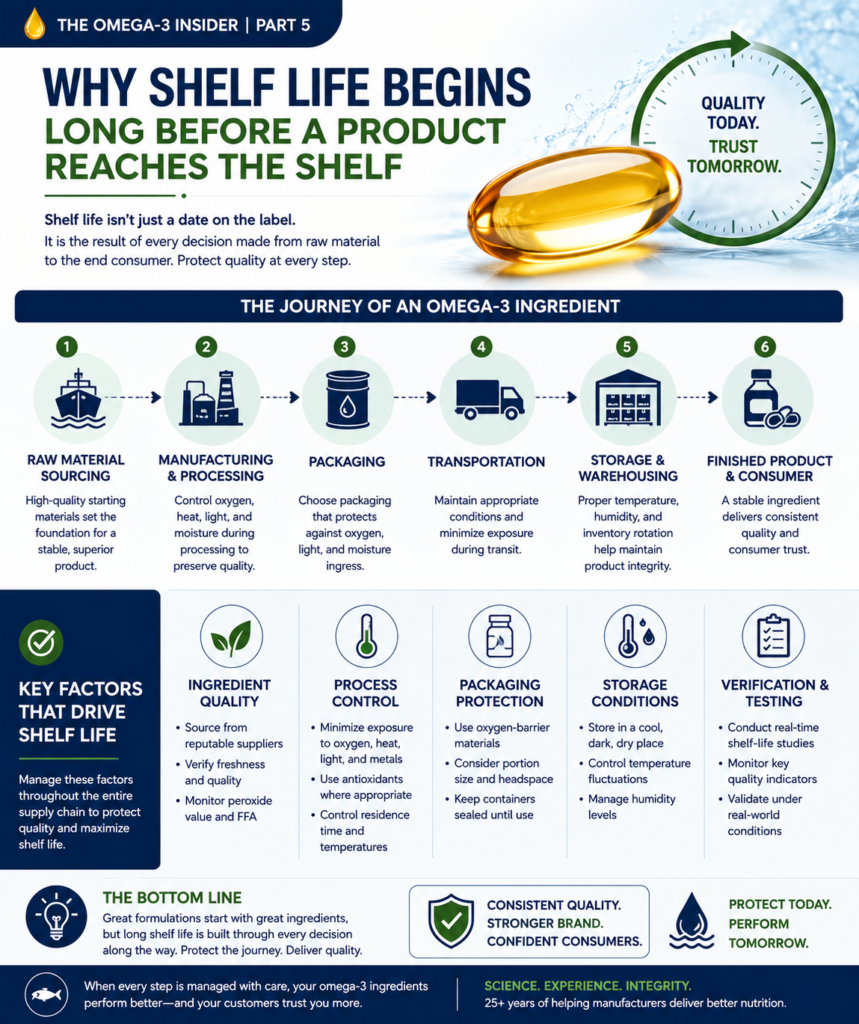
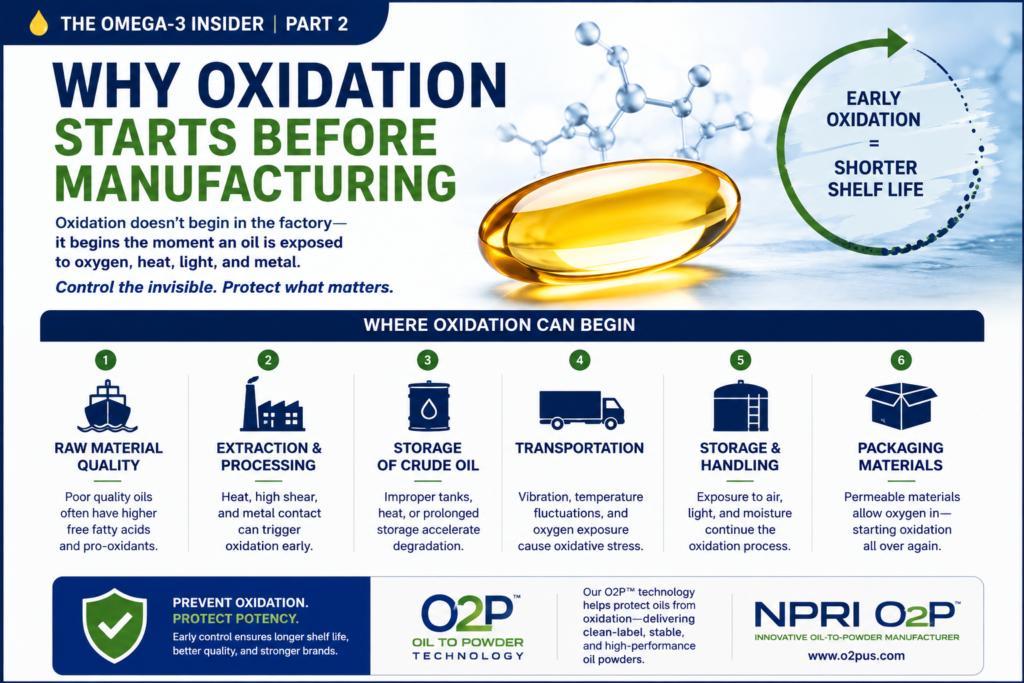
Why Shelf Life Begins Long Before a Product Reaches the Shelf
How O2P™ Technology Protects Oils from Oxidation
Shelf life begins long before a finished product reaches the consumer. Learn how raw material quality, manufacturing, packaging, storage, and transportation all contribute to product stability and long-term performance.
Oxidation begins long before oils reach the manufacturing line. Learn how raw material quality, processing, storage, transportation, and oxygen exposure can silently reduce stability, potency, and shelf life.
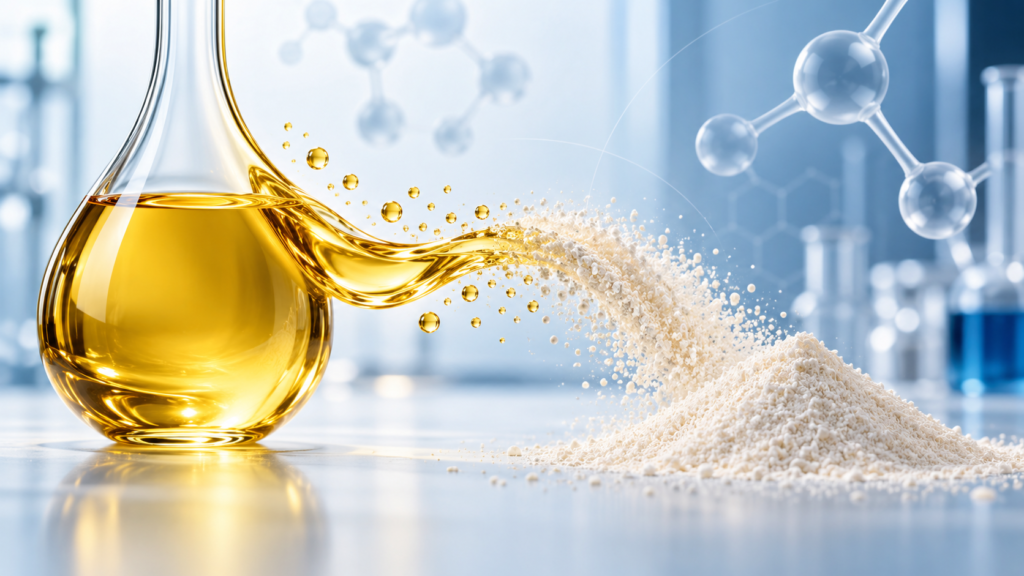
As omega-3 moves beyond softgels and liquid oils, product developers must consider how EPA and DHA are converted into functional powders without compromising quality.
