
Why Oil Powders Cake — and How to Reduce Caking During Storage
An oil powder may leave the manufacturing line as a dry, free-flowing material and still develop lumps, compacted areas, or poor flow several weeks or months later.
This is commonly described as caking.
For formulators and manufacturers, caking is more than a cosmetic problem. A powder that no longer flows consistently can create difficulties with weighing, blending, conveying, filling, packaging, and maintaining uniformity in the finished product.
The important point is that caking rarely has a single cause. It usually develops through an interaction between the oil, carrier system, moisture, temperature, particle characteristics, packaging, and storage conditions.
Understanding those factors can help reduce the problem before it reaches production.
What Is Caking?
Caking occurs when individual powder particles begin adhering to one another and form larger masses.
In mild cases, small lumps may break apart easily when the bag is handled. In more severe cases, the powder can form dense agglomerates or even become partially solidified inside the package.
A powder does not necessarily have to contain visible moisture for caking to occur. Relatively small changes in environmental humidity or temperature can alter the surface characteristics of certain powder ingredients.
This becomes particularly important with oil powders because the formulation contains both a liquid lipid phase and a solid carrier phase.
1. Moisture Is Often a Major Contributor
Many carriers used in powdered ingredients can absorb moisture from the surrounding atmosphere.
When moisture is absorbed, the surface of the powder particles may become softer or slightly tacky. As particles contact one another, they can begin forming bridges between their surfaces.
Over time, those bridges may become strong enough to create visible lumps.
The problem can become more pronounced when a bag is repeatedly opened in a humid production environment.
This is why moisture control should be considered throughout the powder’s life — not only during manufacturing.
2. Oil Loading Can Affect Caking
Higher oil loading may be attractive because it allows more active oil to be delivered per gram of powder.
However, increasing oil content also changes the physical balance of the powder.
If the carrier system cannot adequately retain and support the oil, more oil may become available at or near the particle surface. This can create a tackier material with poorer flow characteristics.
In practical terms, the highest possible oil loading is not always the most useful formulation.
A slightly lower oil concentration that remains stable and free-flowing throughout storage may perform better in production than a higher-load powder that becomes sticky or compacted.
3. The Carrier System Matters
Different carriers behave differently when exposed to oil, moisture, pressure, and temperature.
The carrier must do more than simply convert liquid oil into a powder.
It must also help maintain:
- particle integrity
- oil retention
- acceptable bulk density
- flowability
- physical stability during storage
This is one reason two oil powders containing the same oil percentage may behave very differently.
The difference may have less to do with the oil itself and more to do with how effectively the carrier system manages that oil.
4. Temperature Changes Can Accelerate the Problem
Storage temperature is another important factor.
When powders move between warmer and cooler environments, temperature changes can affect both the lipid phase and the moisture balance within the package.
Heat can soften certain fats or increase surface mobility of the oil. Temperature cycling may also encourage moisture migration within the package.
For sensitive oil powders, repeatedly moving product between substantially different storage temperatures is generally less desirable than maintaining reasonably stable conditions.
5. Pressure During Storage Can Promote Compaction
Powder at the bottom of a large package experiences more pressure than powder at the top.
Stacking cartons or bags for long periods may further compress the material.
A powder that initially flows well can therefore become compacted during warehousing or transportation.
This is particularly important for powders that already have marginal flow characteristics.
Caking caused by compression may look similar to moisture-related caking, but the underlying mechanism can be different.
6. Particle Characteristics Affect Flow
Powder flow is influenced by characteristics such as:
- particle size
- particle-size distribution
- surface texture
- density
- particle shape
- electrostatic behavior
Very fine particles generally have more surface contact with neighboring particles and may be more cohesive.
Large differences in particle size can also allow smaller particles to settle into the spaces between larger ones, increasing packing density.
Therefore, particle engineering plays an important role in determining how a powder behaves during storage and handling.
7. Flow Aids Can Help — But They Are Not a Cure for a Poor Formulation
Flow aids such as certain forms of silica are commonly used to improve powder handling.
They can reduce friction and help prevent particles from adhering to one another.
However, a flow aid cannot completely compensate for excessive surface oil, inappropriate carrier selection, uncontrolled moisture, or poor storage conditions.
Flow aids should therefore be considered part of the overall formulation strategy rather than a solution added after the powder has already become unstable.
8. Packaging Is Part of Powder Stability
Packaging is sometimes treated as the final step after formulation has been completed.
For sensitive oil powders, it should be considered part of the formulation system itself.
A suitable package should help limit exposure to:
- moisture
- oxygen
- heat
- light
- external contamination
Barrier packaging can be especially important for hygroscopic powders and oxidation-sensitive oils.
Once the package is opened, however, the protective environment changes. Manufacturers using the powder should minimize unnecessary exposure to ambient air and reseal partially used packages whenever possible.
How Can Caking Be Reduced?
There is no single solution that applies to every oil powder.
A successful approach normally involves controlling several variables together:
Choose the carrier system for the application.
Carrier selection should consider physical stability and handling characteristics, not simply oil-loading capacity.
Avoid pushing oil loading beyond the practical capability of the powder.
Maximum loading and optimum loading are not necessarily the same thing.
Control moisture exposure.
Manufacturing, packaging, transportation, warehousing, and customer handling can all influence moisture pickup.
Use appropriate packaging.
Moisture and oxygen barriers can help protect sensitive formulations.
Maintain reasonable storage conditions.
Large temperature fluctuations and excessive heat should be avoided where possible.
Evaluate flow over time.
A powder that flows well immediately after manufacturing should also be evaluated after realistic storage periods.
A Powder Should Be Designed for the Entire Supply Chain
The true performance of an oil powder is not determined on the day it is manufactured.
It is determined by how that powder behaves after transportation, warehousing, storage, opening, dispensing, blending, and incorporation into the final product.
That is why caking should not automatically be treated as a simple storage problem.
It can be an indication that the relationship between oil loading, carrier system, particle characteristics, packaging, and environmental conditions needs to be reconsidered.
For formulators, the objective should not simply be to create a powder.
It should be to create a powder that remains usable.
NPRI-O2P, LLC specializes in converting liquid oils into stable, free-flowing powders for nutraceutical, functional food, beverage, pet nutrition, pharmaceutical, and related applications. Our O2P™ process operates at room temperature without the use of high-temperature spray drying.
Suggested Knowledge Center title:
Why Oil Powders Cake — and How to Reduce Caking During Storage
Suggested short card description:
Caking can turn a free-flowing oil powder into a production problem. Learn how moisture, oil loading, carrier selection, temperature, pressure, and packaging influence powder stability.
Need Help With Your Formulation?
Whether you’re developing a new oil powder, improving product stability, or solving formulation challenges, our technical team is ready to help. Contact us for formulation guidance, product recommendations, or sample requests.
Recommended Technical Articles
Why Shelf Life Begins Long Before a Product Reaches the Shelf
How O2P™ Technology Protects Oils from Oxidation
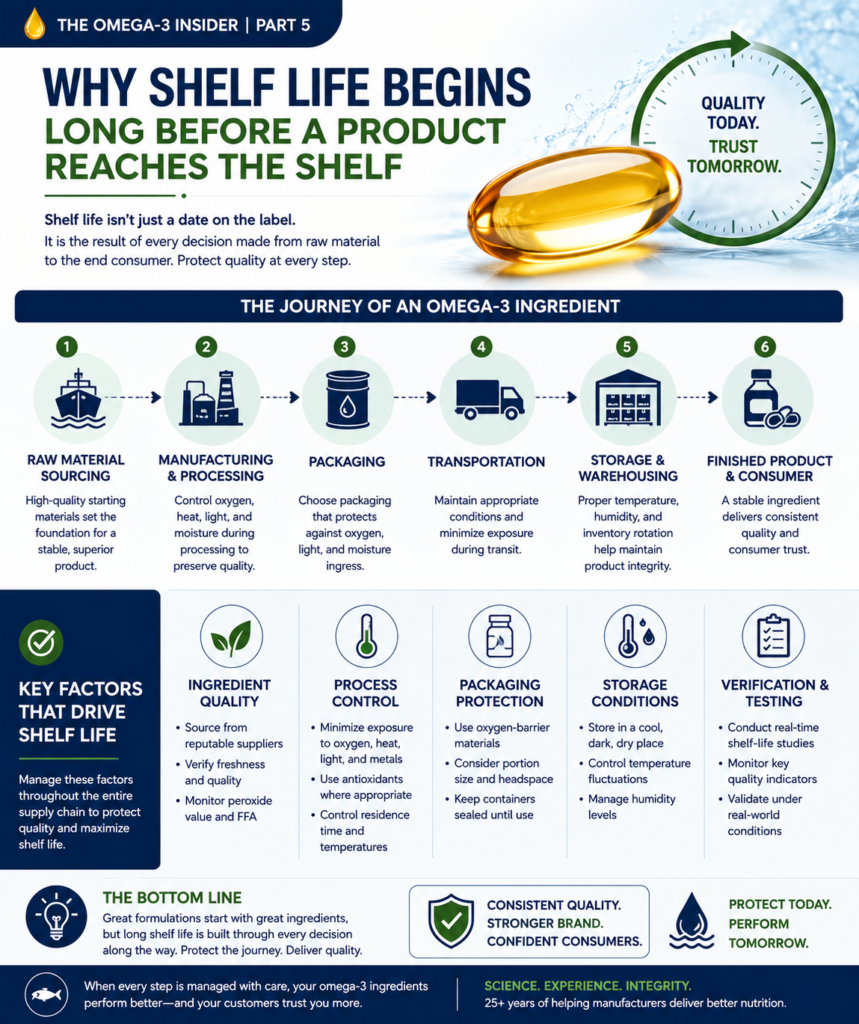
Shelf life begins long before a finished product reaches the consumer. Learn how raw material quality, manufacturing, packaging, storage, and transportation all contribute to product stability and long-term performance.
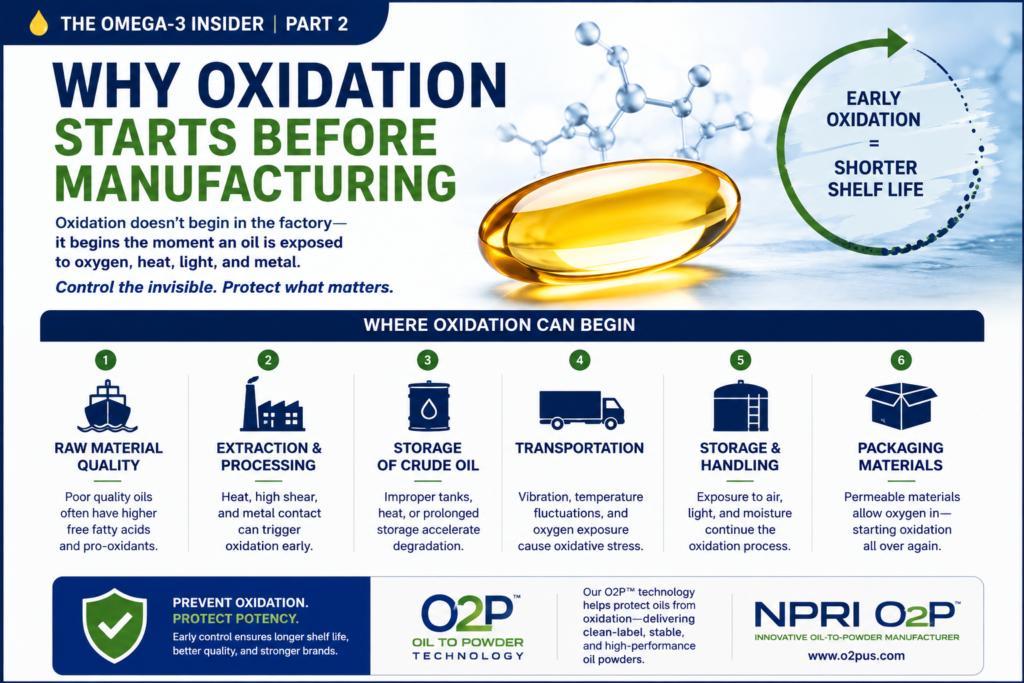
Oxidation begins long before oils reach the manufacturing line. Learn how raw material quality, processing, storage, transportation, and oxygen exposure can silently reduce stability, potency, and shelf life.
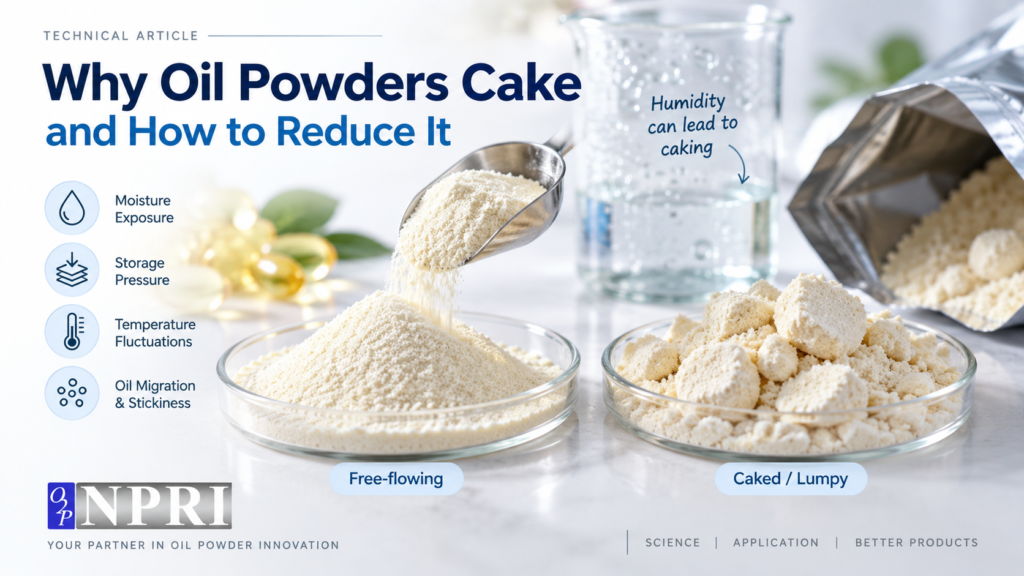
Caking can turn a free-flowing oil powder into a production problem. Learn how moisture, oil loading, carrier selection, temperature, pressure, and packaging influence powder stability.
