
Your Oil, Our Technology: The Advantages of Toll Manufacturing Oil Powders
Transforming Customer-Supplied Oils into Commercially Ready Powder Ingredients
Many nutraceutical, functional food, beverage, and pet nutrition manufacturers have already invested considerable resources in selecting and qualifying their preferred oil suppliers.
These oils may have specific fatty acid profiles, purity requirements, certifications, or proprietary formulations that are important to the finished product.
However, incorporating liquid oils into dry formulations can present significant manufacturing challenges.
What if manufacturers could retain their existing oil supply while converting those same oils into convenient, free-flowing powders?
This is where toll manufacturing using NPRI-O2P’s proprietary O2P™ Oil-to-Powder technology offers a practical solution.
What Is Oil Powder Toll Manufacturing?
Toll manufacturing allows customers to supply their own liquid oils while NPRI-O2P provides the specialized technology, formulation expertise, and manufacturing capabilities needed to convert them into powder ingredients.
Rather than requiring customers to purchase a completely new oil powder from another supplier, this arrangement allows them to maintain greater control over their original oil specifications and sourcing relationships.
NPRI-O2P focuses on the conversion of the supplied liquid oil into a powder format suited to the intended application.
Why Manufacturers Choose Toll Manufacturing
1. Maintain Established Oil Supply Relationships
Manufacturers often have longstanding relationships with oil suppliers who meet their quality, pricing, sustainability, and traceability requirements.
Changing suppliers solely to obtain an oil powder may introduce unnecessary qualification work and supply-chain complexity.
Toll manufacturing allows manufacturers to retain their chosen oils while gaining access to specialized powder conversion capabilities.
2. Avoid Investment in Specialized Manufacturing Equipment
Converting liquid oils into commercially viable powder ingredients requires specialized processing technology, formulation expertise, and manufacturing controls.
Developing these capabilities internally can require significant capital investment, technical resources, and operational commitments.
Outsourcing powder conversion enables manufacturers to focus on product development, marketing, and distribution without establishing a separate oil powder production operation.
3. Improve Compatibility with Dry Formulations
Liquid oils can create challenges in manufacturing environments designed primarily for dry ingredients.
Depending on the formulation, these may include uneven distribution, equipment handling issues, and difficulties maintaining consistent powder characteristics.
Converting liquid oils into free-flowing powders can facilitate their incorporation into:
Dietary supplement capsules and tablets
Nutritional powder blends
Functional food products
Ready-to-mix beverage formulations
Pet nutritional supplements
Other dry ingredient systems
The appropriate carrier selection and powder characteristics depend on each product’s formulation requirements.
4. Protect Sensitive Oil Ingredients
Many functional oils contain components sensitive to oxygen, temperature, and processing conditions.
Examples include omega-3 oils containing EPA and DHA, certain specialty botanical oils, and selected oil-soluble nutritional ingredients.
NPRI-O2P’s proprietary O2P™ technology operates at room temperature under controlled, inert processing conditions, without conventional heat-intensive conversion.
This approach is designed to minimize processing-related exposure that may compromise sensitive oil ingredients.
Final oxidative stability and shelf life depend on the oil, formulation, packaging, and storage conditions and should be evaluated for each product.
5. Customize Powder Formulations
Different applications require different powder characteristics.
An oil powder intended for capsule filling may have different requirements from one developed for beverage dispersion or pet nutrition.
NPRI-O2P can evaluate carrier systems, oil loading, powder flowability, and application-specific performance.
Depending on the intended formulation and technical feasibility, various food-grade carrier options may be considered, including selected clean-label ingredients.
The objective is not simply to convert an oil into a powder, but to develop an ingredient that performs consistently in its intended manufacturing application.
Oil Loading Is an Important Consideration
Powder oil loading is the percentage of liquid oil contained in the finished powder.
For example, a powder containing 50% oil provides approximately 500 mg of oil per gram of finished powder.
However, oil loading should not be confused with the concentration of active fatty acids or other functional constituents.
For omega-3 applications, the final EPA and DHA content depends on both the original oil specification and the percentage of oil incorporated into the powder.
Higher oil loading may reduce the amount of carrier required, but the optimum loading must also account for flowability, physical stability, handling, and finished-product performance.
Applications Across Multiple Industries
Oil powder toll manufacturing offers formulation opportunities across several markets.
Nutraceuticals: Omega-3 oils, MCT oils, specialty fatty acids, and other functional lipids for capsules, tablets, and nutritional blends.
Functional Foods and Beverages: Powdered oils suitable for dry mixes, nutritional products, and applications requiring controlled oil dispersion.
Pet Nutrition: Functional oil powders designed for incorporation into pet supplements, powdered nutrition products, and selected dry formulations.
Specialty Applications: Customer-specific oil systems requiring customized carrier selection and powder manufacturing characteristics.
Toll Manufacturing at NPRI-O2P
NPRI-O2P provides confidential toll manufacturing services for customer-supplied oils using its proprietary O2P™ technology.
Our technical team evaluates the proposed oil, intended application, target oil loading, carrier requirements, and finished powder specifications before determining manufacturing feasibility.
Key commercial considerations:
Customer-supplied oil
Minimum toll manufacturing order: 100 kg of finished powder
Custom formulation and technical evaluation
Finished powder packaging options, including nitrogen-purged foil bags
Manufacturing in the United States
FSSC 22000-certified manufacturing operations
Each project is evaluated based on its technical requirements and commercial scope.
Conclusion: Keep Your Oil. Expand Your Possibilities.
For manufacturers already sourcing high-quality functional oils, converting those oils into powders should not necessarily require changing suppliers or developing a new manufacturing operation.
Toll manufacturing offers a practical route to expanding product formats while maintaining control over the original oil supply.
With proprietary O2P™ technology, NPRI-O2P helps bridge the gap between liquid oil ingredients and commercial powder applications.
Discuss Your Oil Powder Manufacturing Requirements
If your company has an existing liquid oil and is exploring conversion into a free-flowing powder, our technical team welcomes the opportunity to evaluate your requirements.
NPRI-O2P, LLC — Las Vegas, Nevada, USA
Website: https://o2pus.com
Email: godfrey@o2pus.com
Proprietary O2P™ Oil-to-Powder Technology — Custom Formulation and Commercial Manufacturing.
Need Help With Your Formulation?
Whether you’re developing a new oil powder, improving product stability, or solving formulation challenges, our technical team is ready to help. Contact us for formulation guidance, product recommendations, or sample requests.
Recommended Technical Articles
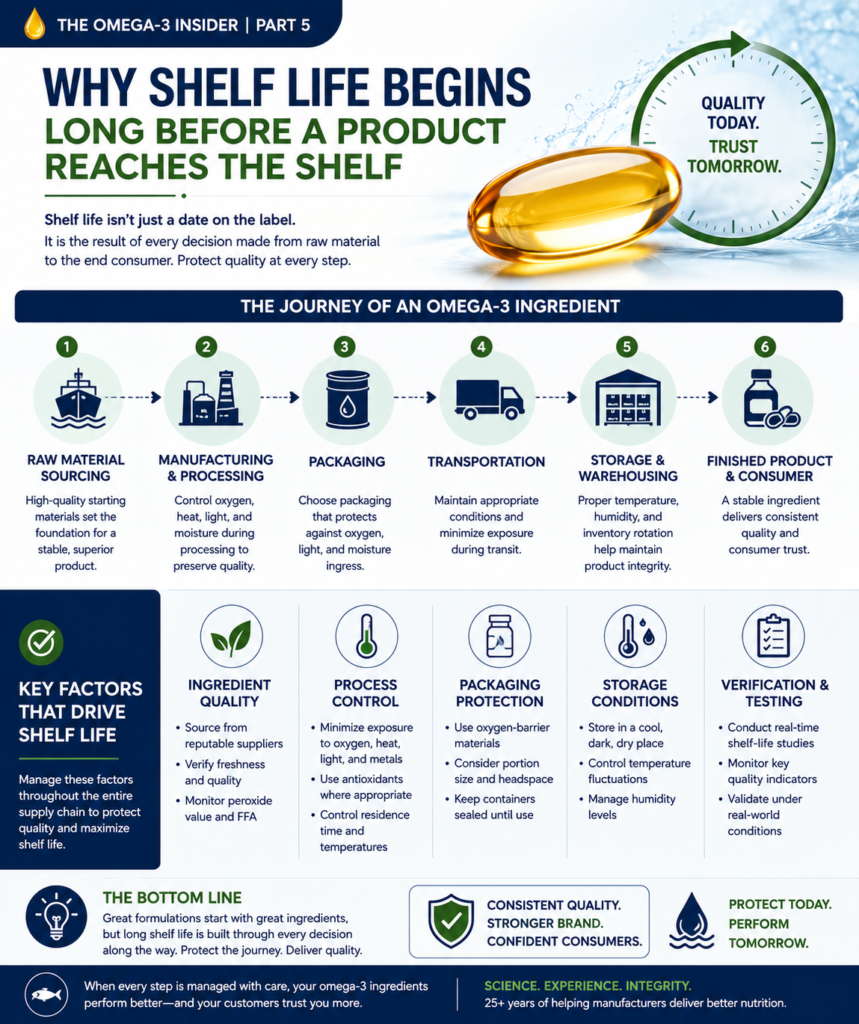
Why Shelf Life Begins Long Before a Product Reaches the Shelf
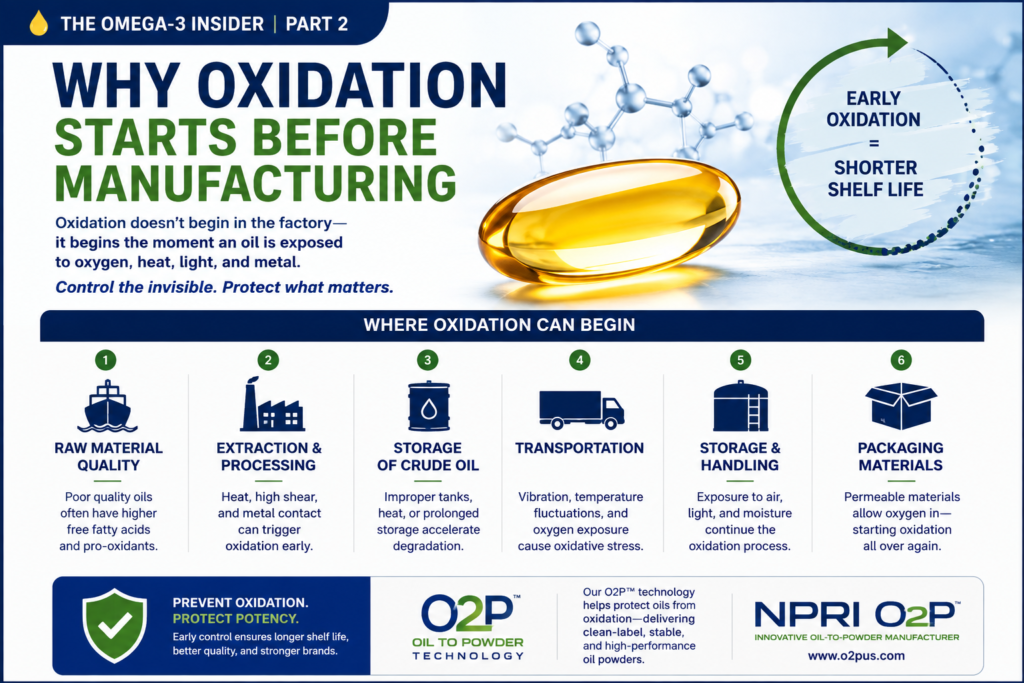
How O2P™ Technology Protects Oils from Oxidation
Shelf life begins long before a finished product reaches the consumer. Learn how raw material quality, manufacturing, packaging, storage, and transportation all contribute to product stability and long-term performance.
Oxidation begins long before oils reach the manufacturing line. Learn how raw material quality, processing, storage, transportation, and oxygen exposure can silently reduce stability, potency, and shelf life.
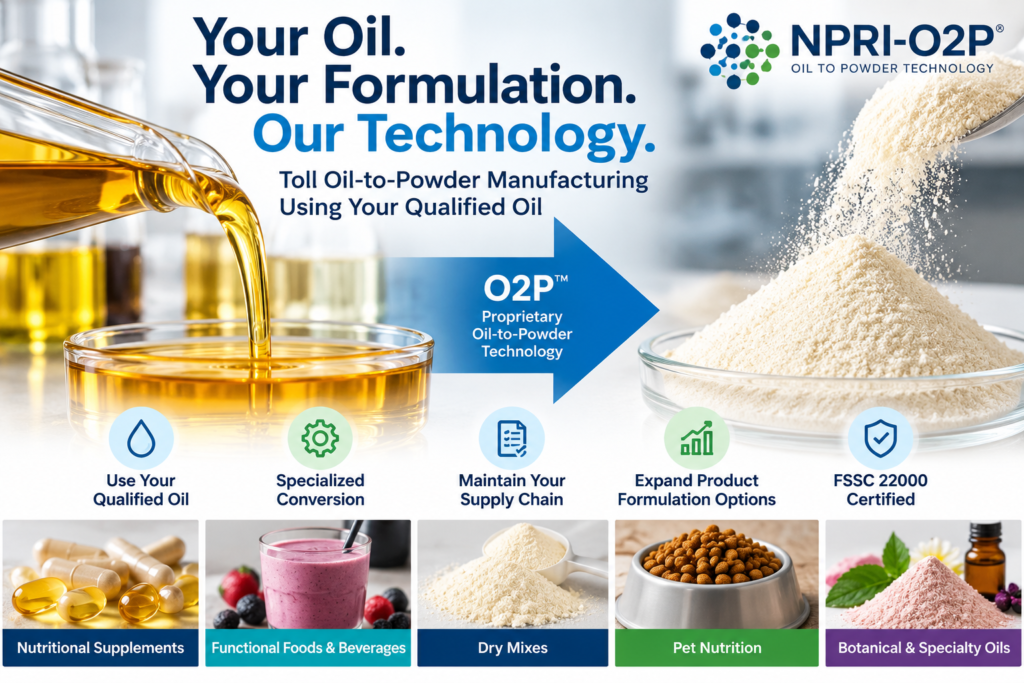
Discover how NPRI-O2P helps manufacturers transform customer-supplied liquid oils into free-flowing powders using proprietary O2P™ technology, without changing their existing oil supplier.