
The Science of Fatty Acids – Part 1: Understanding Saturated, Monounsaturated, and Polyunsaturated Fats
Understanding Saturated, Monounsaturated, and Polyunsaturated Fats
Fats and oils play an essential role in human and animal nutrition. They provide energy, support cell membrane structure, assist in hormone production, help absorb fat-soluble vitamins, and supply essential fatty acids that the body cannot produce on its own.
However, not all fatty acids behave the same.
Their nutritional characteristics, physical properties, and chemical stability are determined largely by one factor—the number of carbon-carbon double bonds within their molecular structure.
Understanding these differences is the foundation for developing stable, high-quality food, nutraceutical, and pet nutrition products.
Saturated Fatty Acids
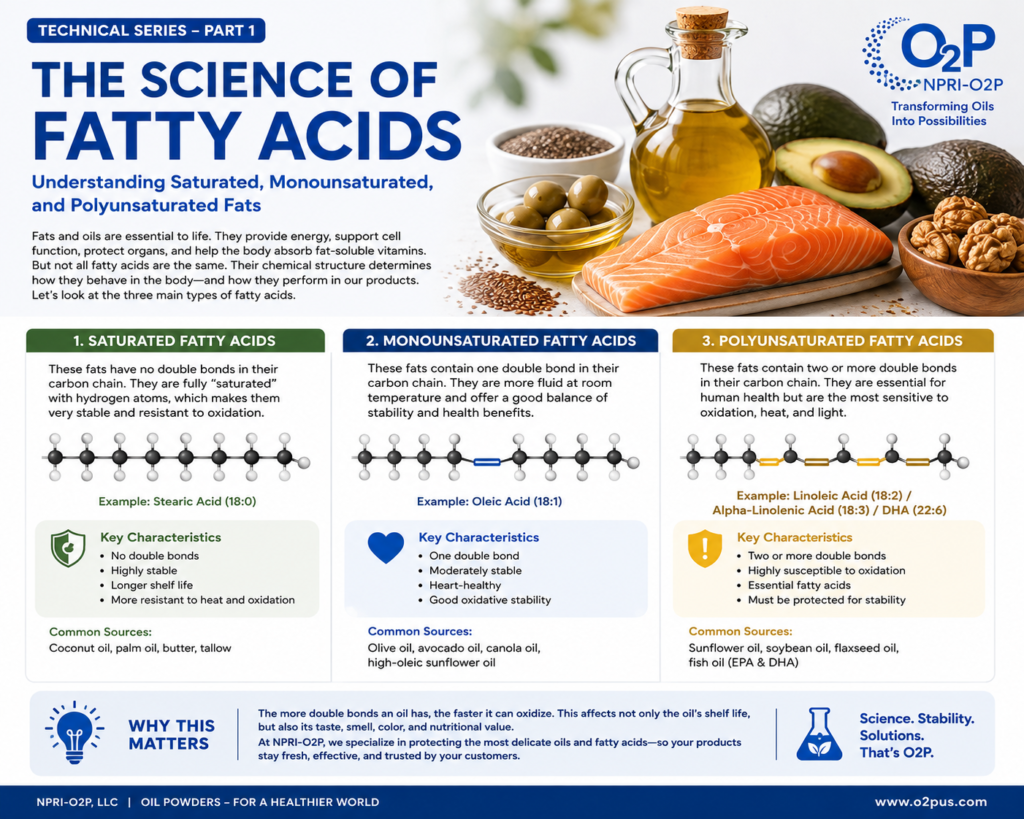
Saturated fatty acids contain no carbon-carbon double bonds.
Every carbon atom is fully bonded to hydrogen atoms, creating a highly stable molecular structure.
Because there are no double bonds available for oxygen to attack, saturated fats are naturally the most resistant to oxidation.
Examples include:
- Coconut oil
- Palm oil
- Butterfat
- Stearic acid
Their excellent oxidative stability makes them attractive in applications requiring long shelf life, although nutritional recommendations often encourage balancing saturated fat intake with unsaturated fats.
Monounsaturated Fatty Acids
Monounsaturated fatty acids contain one carbon-carbon double bond.
That single double bond provides improved nutritional benefits while maintaining relatively good oxidative stability.
Examples include:
- Olive oil
- Avocado oil
- High-oleic sunflower oil
- High-oleic safflower oil
Oleic acid (18:1) is the most common monounsaturated fatty acid and is valued because it combines heart-health benefits with significantly greater stability than many polyunsaturated oils.
This is one reason why high-oleic oils have become increasingly popular in both food manufacturing and nutritional formulations.
Polyunsaturated Fatty Acids (PUFAs)
Polyunsaturated fatty acids contain two or more carbon-carbon double bonds.
These include many of the world’s most important essential fatty acids, including:
- Linoleic Acid (Omega-6)
- Alpha-Linolenic Acid (Omega-3)
- EPA
- DHA
These fatty acids support cardiovascular health, brain development, vision, immune function, and numerous other biological processes.
However, these same double bonds that make them biologically valuable also make them chemically fragile.
Each additional double bond creates another potential site where oxygen can react with the molecule, increasing the likelihood of oxidation.
Why This Matters
For manufacturers, choosing an oil isn’t simply a nutritional decision.
It is also a stability decision.
As the number of double bonds increases, oils generally become more susceptible to oxidation, which can lead to:
- Reduced nutritional quality
- Off-flavors and unpleasant odors
- Shorter shelf life
- Lower consumer acceptance
- Reduced product performance
Understanding the relationship between fatty acid structure and oxidative stability allows formulators to make more informed decisions when selecting ingredients for foods, dietary supplements, beverages, and pet nutrition products.
Need Help With Your Formulation?
Whether you’re developing a new oil powder, improving product stability, or solving formulation challenges, our technical team is ready to help. Contact us for formulation guidance, product recommendations, or sample requests.
Recommended Technical Articles
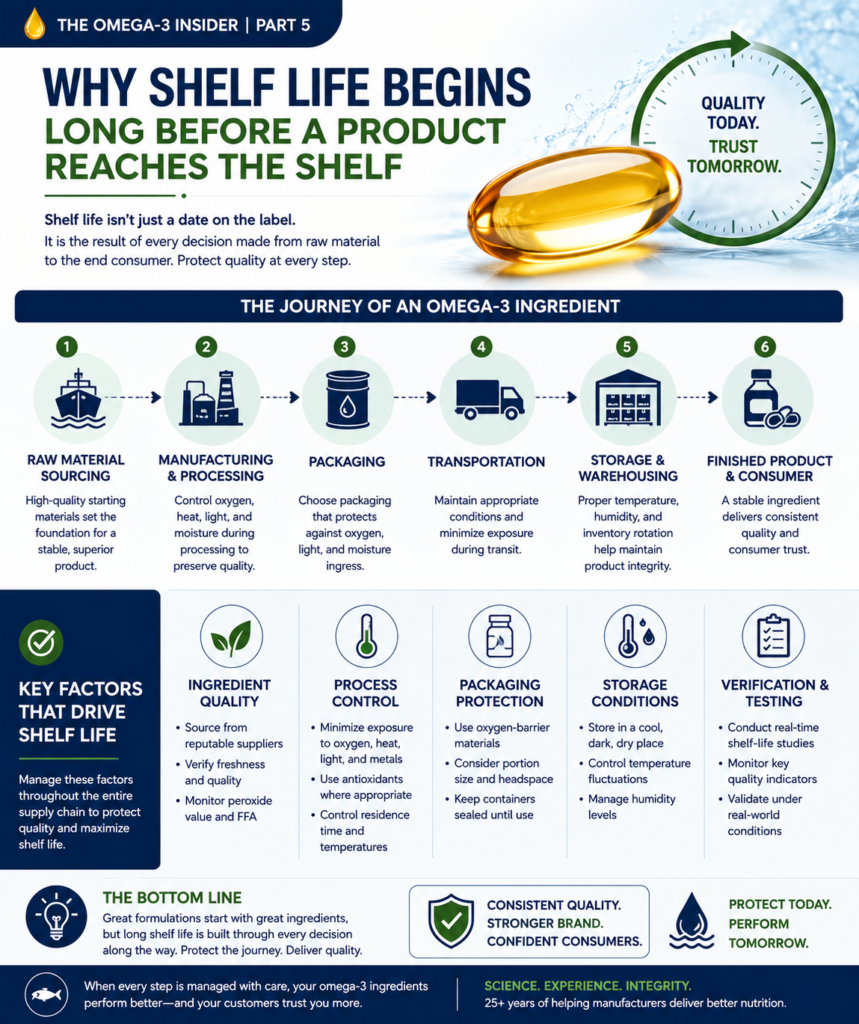
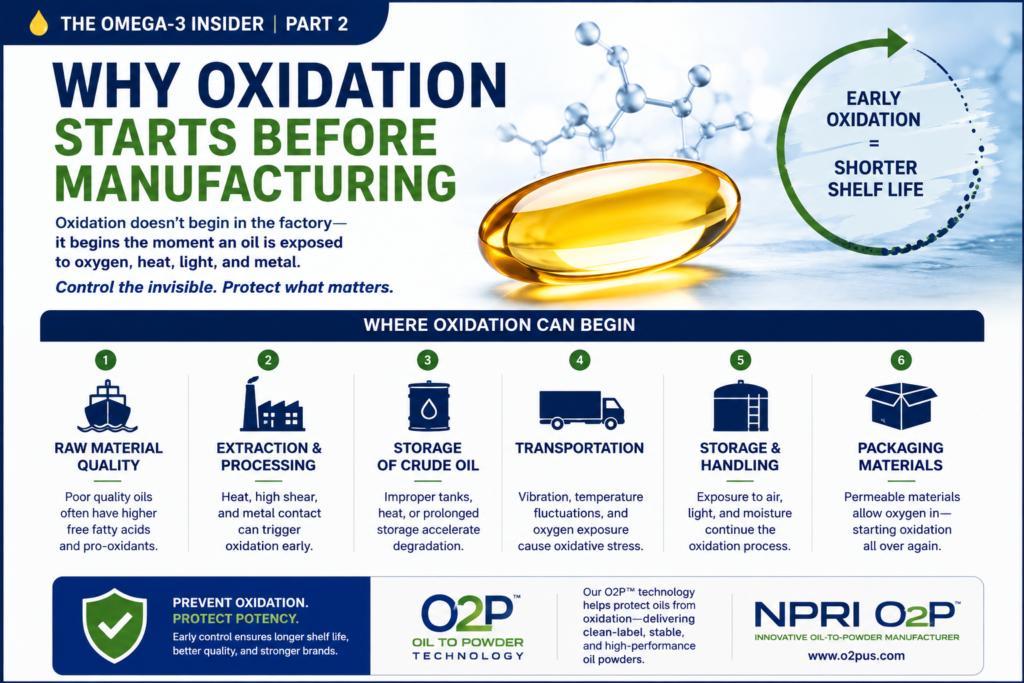
Why Shelf Life Begins Long Before a Product Reaches the Shelf
How O2P™ Technology Protects Oils from Oxidation
The Science of Fatty Acids – Part 1 | Understanding the Three Types of Fatty Acids
Shelf life begins long before a finished product reaches the consumer. Learn how raw material quality, manufacturing, packaging, storage, and transportation all contribute to product stability and long-term performance.
Oxidation begins long before oils reach the manufacturing line. Learn how raw material quality, processing, storage, transportation, and oxygen exposure can silently reduce stability, potency, and shelf life.
Discover how the three major types of fatty acids differ and why their chemical structure affects stability, nutrition, and product performance.
