
Omega-3 Fish Oil: Nutraceutical Hype—or an Ingredient Here to Stay?
For decades, omega-3 fish oil has occupied a prominent place in the global nutraceutical industry.
Walk through almost any pharmacy, health-food store, supermarket supplement aisle, or online marketplace and you will find shelves filled with fish oil products. EPA and DHA have been associated with cardiovascular health, brain development, eye health, healthy aging, inflammation, pregnancy, and numerous other areas of human nutrition.
But after decades of promotion, an important question deserves to be asked:
Is omega-3 fish oil truly an important nutritional ingredient—or has it simply benefited from one of the most successful marketing stories in the nutraceutical industry?
The answer is more complicated—and more interesting—than either side of the debate sometimes suggests.
The Rise of Omega-3
Scientific interest in marine omega-3 fatty acids accelerated during the 1970s as researchers investigated relationships between seafood consumption and cardiovascular health.
That research helped focus attention on two long-chain omega-3 fatty acids found predominantly in marine sources:
EPA — Eicosapentaenoic Acid
and
DHA — Docosahexaenoic Acid
Over the following decades, thousands of scientific studies examined their biological functions and potential health effects.
The nutraceutical industry responded.
Fish oil moved from a relatively specialized nutritional product into one of the most recognizable dietary supplements in the world.
And, as often happens when science meets consumer marketing, the message became much simpler than the science.
“Fish oil is good for your heart.”
“Omega-3 is good for your brain.”
“Everyone should take fish oil.”
Those are powerful marketing messages.
But are they scientifically accurate?
Some of the Hype Deserves to Be Challenged
One of the most important developments in omega-3 research has been the growing recognition that not every claim made about fish oil supplementation is supported equally by clinical evidence.
Large clinical trials and subsequent reviews have produced mixed results regarding the ability of ordinary omega-3 supplements to prevent cardiovascular events in otherwise healthy populations.
The U.S. National Institutes of Health notes that evidence supporting omega-3 supplementation is stronger in some populations and applications than in others.
The U.S. Food and Drug Administration has also been careful with cardiovascular claims involving EPA and DHA. Certain cardiovascular-related statements are permitted only as qualified health claims, reflecting credible but not conclusive evidence.
That distinction matters.
It tells us something the nutraceutical industry occasionally forgets:
A biologically important nutrient does not automatically make every supplement claim involving that nutrient true.
There is a significant difference between nutritional science and nutritional marketing.
But That Does Not Make Omega-3 a Fraud
This is where the discussion often becomes unnecessarily polarized.
If a study finds that a particular fish oil supplement did not prevent heart attacks in a particular population, headlines may announce:
“Fish Oil Doesn’t Work.”
But scientifically, that conclusion is far too broad.
EPA and DHA are not pharmaceutical inventions created by the supplement industry.
They are naturally occurring long-chain polyunsaturated fatty acids with established biological functions.
DHA, for example, is an important structural component of cellular membranes and is particularly concentrated in tissues such as the brain and retina.
EPA participates in numerous metabolic pathways and serves as a precursor for biologically active lipid mediators.
Furthermore, one of the most consistently demonstrated effects of EPA and DHA is their ability to reduce elevated triglyceride levels.
The American Heart Association has concluded that prescription-strength omega-3 fatty acids at appropriate dosages can effectively lower elevated triglycerides.
That is no longer simply a nutraceutical marketing proposition.
It is part of modern lipid management.
Fish Oil and Omega-3 Are Not the Same Question
Perhaps the most important distinction for the future of this industry is this:
Fish oil is a source. Omega-3 fatty acids are the nutrients.
For many years, the two became almost synonymous because marine fish oils were the primary commercial source of EPA and DHA.
But that is changing.
Microalgae can produce EPA and DHA directly.
In fact, marine microorganisms are at the foundation of the aquatic omega-3 food chain. Fish accumulate these fatty acids through the marine food web.
Today, commercial technology is increasingly capable of producing EPA and DHA from cultivated microalgae.
Research is also progressing into other potential sources and production technologies.
Therefore, asking whether fish oil will exist forever is different from asking whether EPA and DHA will remain important nutritional ingredients.
The second question may be much easier to answer.
The Future May Not Look Like the Past
For decades, the image of omega-3 supplementation has been a bottle containing large softgel capsules filled with fish oil.
That may not define the next generation of omega-3 nutrition.
EPA and DHA are increasingly appearing in different delivery systems and applications:
- Functional foods
- Nutritional powders
- Medical and specialized nutrition
- Pet nutrition
- Aquaculture
- Fortified beverages
- Gummies and alternative supplement formats
- Algal-based products
- Concentrated nutritional formulations
This evolution is important because one of omega-3’s historical limitations has not necessarily been the ingredient itself.
It has been delivery.
Fish oils are liquids.
They can oxidize.
They can develop undesirable odor and flavor.
They can be difficult to incorporate into dry formulations.
They may also present manufacturing and stability challenges when incorporated into foods, beverages, powders, tablets, and other finished products.
Solving those problems could ultimately matter as much to the future of omega-3 as developing another softgel.
Sustainability Will Also Shape the Industry
There is another reality the omega-3 industry must confront.
The world’s supply of marine fish oil is finite.
Fish oil is used not only by the nutraceutical industry but also extensively in aquaculture and other animal nutrition applications.
Meanwhile, worldwide demand for EPA and DHA continues.
Recent scientific literature increasingly examines microalgal omega-3 oils and other technologies as alternative sources precisely because conventional marine resources cannot expand indefinitely.
This does not necessarily mean fish oil will disappear.
It means the omega-3 industry will probably become more diverse.
Future EPA and DHA supplies may come from a combination of responsibly managed fisheries, fish-processing by-products, algae, biotechnology, and other emerging sources.
The ingredient is evolving.
So, Was Omega-3 Overhyped?
In some respects, yes.
The nutraceutical industry has sometimes presented omega-3 as though taking a fish oil capsule could prevent an extraordinary range of diseases.
Science does not support every one of those claims equally.
Consumers also deserve to understand that dosage, EPA/DHA concentration, chemical form, diet, health status, product quality, oxidation, and the population being studied can all influence outcomes.
But concluding from this that omega-3 itself was merely a nutraceutical fad would be an equally serious mistake.
The scientific importance of EPA and DHA extends far beyond the marketing of dietary supplements.
These fatty acids participate in fundamental biological processes.
They are used in nutritional, pharmaceutical, food, animal-health and aquaculture applications.
And researchers continue to investigate not only their health effects but also how they can be produced more sustainably and delivered more effectively.
Perhaps We Have Been Asking the Wrong Question
Instead of asking:
“Will people still be taking fish oil capsules 30 years from now?”
perhaps the better question is:
“Will EPA and DHA still be important nutritional ingredients 30 years from now?”
Those are very different questions.
The traditional fish oil softgel may eventually share the market with powders, functional foods, beverages, algal omega-3s and delivery technologies that have not yet reached commercial scale.
But the underlying nutritional ingredients—EPA and DHA—are unlikely simply to disappear.
From Oil to Functional Ingredient
This is also where processing technology becomes increasingly important.
If omega-3 is going to move beyond the traditional softgel and into a wider range of foods, beverages, supplements, pet nutrition and specialized formulations, manufacturers need practical ways to transform sensitive liquid oils into functional ingredients while protecting their quality.
At NPRI-O2P, LLC, this challenge has been central to our work.
Our O2P™ technology converts oils into free-flowing powders through a room-temperature process designed to avoid the high-temperature processing traditionally associated with many oil-powder manufacturing methods.
For omega-3 manufacturers and formulators, the objective is not simply to turn an oil into a powder.
The objective is to make omega-3 easier to formulate, easier to handle and suitable for a broader range of applications while maintaining the integrity of a highly oxidation-sensitive lipid.
That may become increasingly important as the omega-3 industry enters its next chapter.
Hype Comes and Goes. Nutritional Biology Does Not.
Nutraceutical ingredients frequently move through cycles.
A new ingredient becomes fashionable.
Marketing accelerates.
Consumer interest peaks.
Then another ingredient takes its place.
Omega-3 has certainly experienced periods of enormous hype.
But after more than half a century of scientific investigation, EPA and DHA remain the subject of nutritional, medical, pharmaceutical, aquaculture and biotechnology research.
That is not normally the trajectory of an ingredient based solely on marketing.
The claims surrounding omega-3 will continue to be challenged—and they should be.
The sources of omega-3 will change.
The delivery technologies will improve.
The science will become more precise.
And some of today’s assumptions will undoubtedly be revised.
But EPA and DHA themselves?
They appear far more likely to evolve than disappear.
Perhaps that is the real answer.
Omega-3 may have been surrounded by hype. But omega-3 itself was never just the hype.
This article is intended for educational and industry discussion purposes and should not be interpreted as medical advice or as a claim that omega-3 fatty acids diagnose, treat, cure, or prevent any disease.
NPRI-O2P, LLC
Oil-to-Powder Technology for the Next Generation of Functional Ingredients
Need Help With Your Formulation?
Whether you’re developing a new oil powder, improving product stability, or solving formulation challenges, our technical team is ready to help. Contact us for formulation guidance, product recommendations, or sample requests.
Recommended Technical Articles
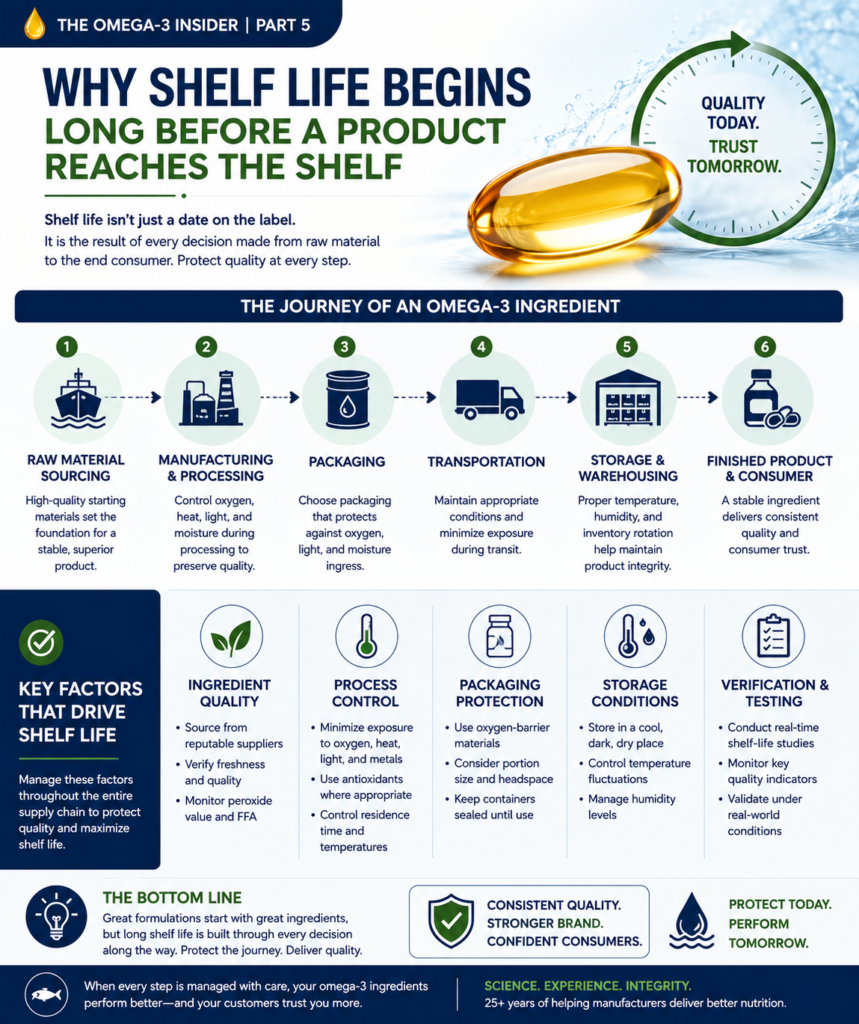
Why Shelf Life Begins Long Before a Product Reaches the Shelf
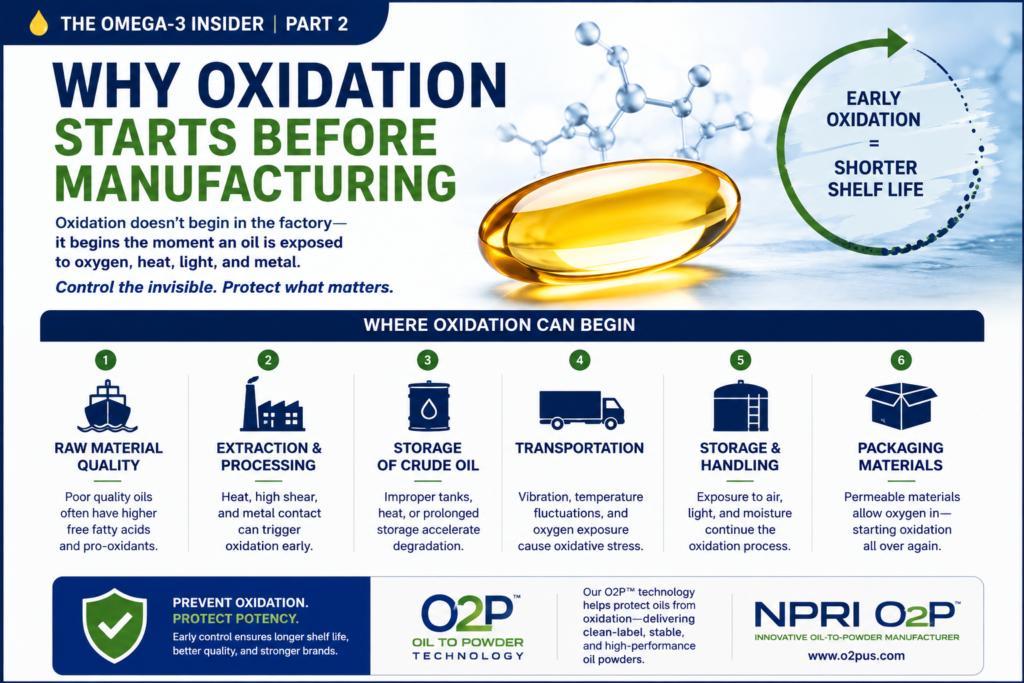
How O2P™ Technology Protects Oils from Oxidation
Shelf life begins long before a finished product reaches the consumer. Learn how raw material quality, manufacturing, packaging, storage, and transportation all contribute to product stability and long-term performance.
Oxidation begins long before oils reach the manufacturing line. Learn how raw material quality, processing, storage, transportation, and oxygen exposure can silently reduce stability, potency, and shelf life.
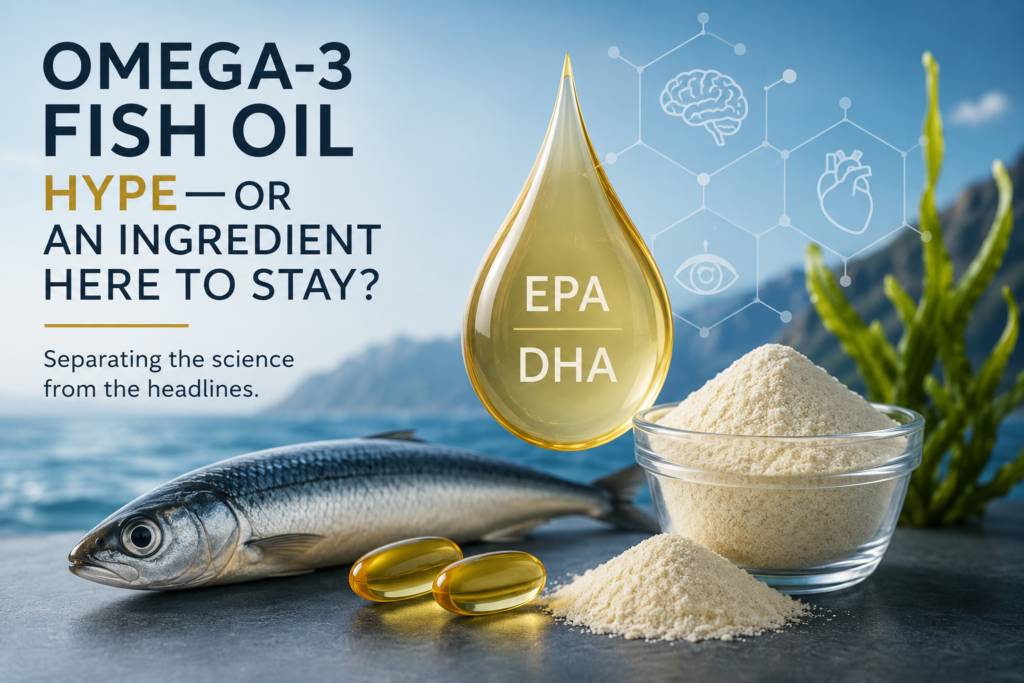
After decades of claims and controversy, is omega-3 just another nutraceutical trend—or an essential ingredient with a lasting future?
