
Oil Powder Does Not Dissolve in Water
One of the most common misconceptions about oil powders is that they “dissolve” in water.
They do not.
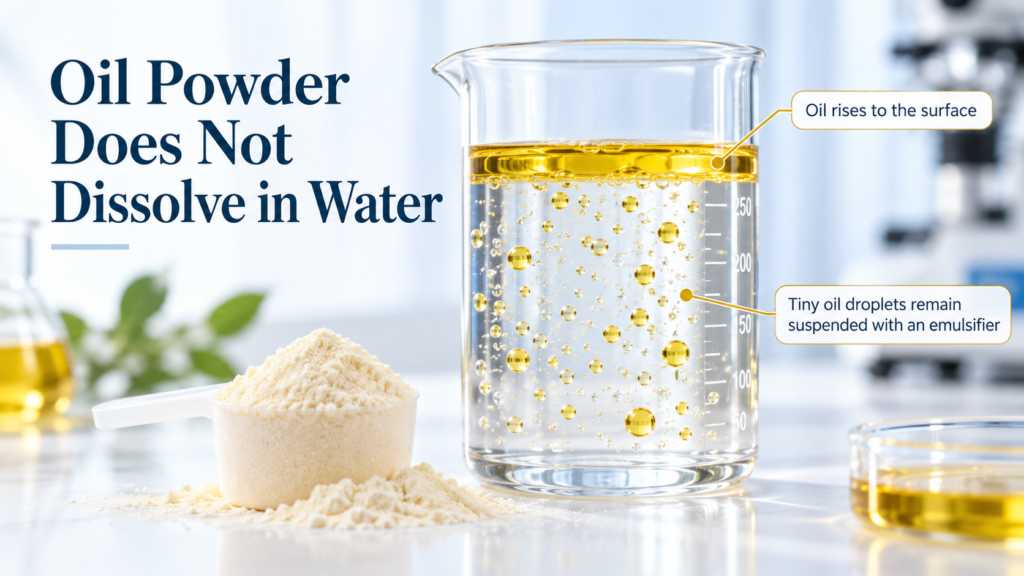
Oil and water are naturally immiscible. In simple terms, they do not naturally mix together. If liquid oil is added directly to water and left undisturbed, the oil will eventually separate from the water and, in most cases, rise toward the surface.
Turning an oil into a powder does not change this basic property of the oil.
So what is happening when an oil powder is added to water and appears to mix evenly?
The Oil Is Still Oil
When an oil powder is introduced into water, the dry components surrounding the oil interact with the water first.
As the powder hydrates and breaks apart, the oil is released.
The oil itself does not become soluble in the water. Instead, with the appropriate formulation and emulsification system, the oil can be broken into very small droplets and kept suspended throughout the water.
To the eye, the mixture may appear uniform. This can easily create the impression that the oil has dissolved.
Chemically, however, the oil remains a separate oil phase.
The Role of the Emulsifier
An emulsifier plays an important role in allowing oil and water to remain mixed.
Emulsifiers contain molecular regions that interact with water and other regions that interact with oil.
This allows the emulsifier to position itself around small oil droplets and help prevent those droplets from quickly joining back together.
Without adequate emulsification, the oil droplets can combine and eventually separate from the water.
This is why the performance of an oil powder in water depends on more than simply converting an oil from liquid form into powder.
The overall formulation matters.
Appearance Is Not the Same as Solubility
A well-formulated oil powder can produce a liquid that looks smooth and uniform after mixing.
That does not mean the oil has dissolved.
This distinction is important because customers sometimes evaluate an oil powder using the same expectations they would apply to sugar, salt or another genuinely water-soluble ingredient.
Those materials dissolve into the water phase.
Oil does not.
The appropriate expectation is that the oil becomes finely distributed and remains suspended within the liquid for the required application.
Mixing Conditions Matter
Even a properly formulated oil powder can behave differently depending on how it is used.
Several factors may affect the final result, including:
- Water temperature
- Mixing speed and mixing time
- Concentration of the oil powder
- Type of emulsifier used
- Other ingredients in the formulation
- Protein, mineral or fiber content
- pH of the finished product
- Whether the product is consumed immediately or stored after mixing
For example, an oil powder intended for a dry nutritional blend may be evaluated very differently from one intended for a ready-to-drink beverage.
That is why the final application should always be considered when evaluating the performance of an oil powder.
Why This Matters to Product Developers
When a customer requests a “water-soluble oil powder,” it is important to understand what performance they are actually trying to achieve.
Do they require the powder to mix easily into water?
Do they need the oil to remain suspended for several minutes, several hours or throughout the shelf life of a finished beverage?
Does the finished product contain protein, minerals, sweeteners or other ingredients that could affect the system?
These questions are often more important than simply asking whether an oil powder is “soluble.”
The correct formulation depends on the intended use.
The Practical Difference
The distinction can be summarized very simply:
Water-soluble ingredients dissolve into water.
Oil remains oil.
With the proper emulsification system, however, the oil can be divided into very small droplets and maintained throughout the water sufficiently for the intended application.
That is what allows an oil powder to function successfully in beverages, nutritional products, pet products, powdered mixes and many other applications.
Understanding the Application Comes First
At NPRI-O2P, we believe an oil powder should be evaluated based on how it performs in the customer’s finished application rather than simply whether it appears to “dissolve” in a glass of water.
Different applications may require different oil concentrations, carrier systems and emulsification approaches.
Understanding the finished product first allows the powder formulation to be designed around the performance the customer actually needs.
For more information about oil-to-powder applications and custom formulations, visit O2PUS.com.
Need Help With Your Formulation?
Whether you’re developing a new oil powder, improving product stability, or solving formulation challenges, our technical team is ready to help. Contact us for formulation guidance, product recommendations, or sample requests.
Recommended Technical Articles
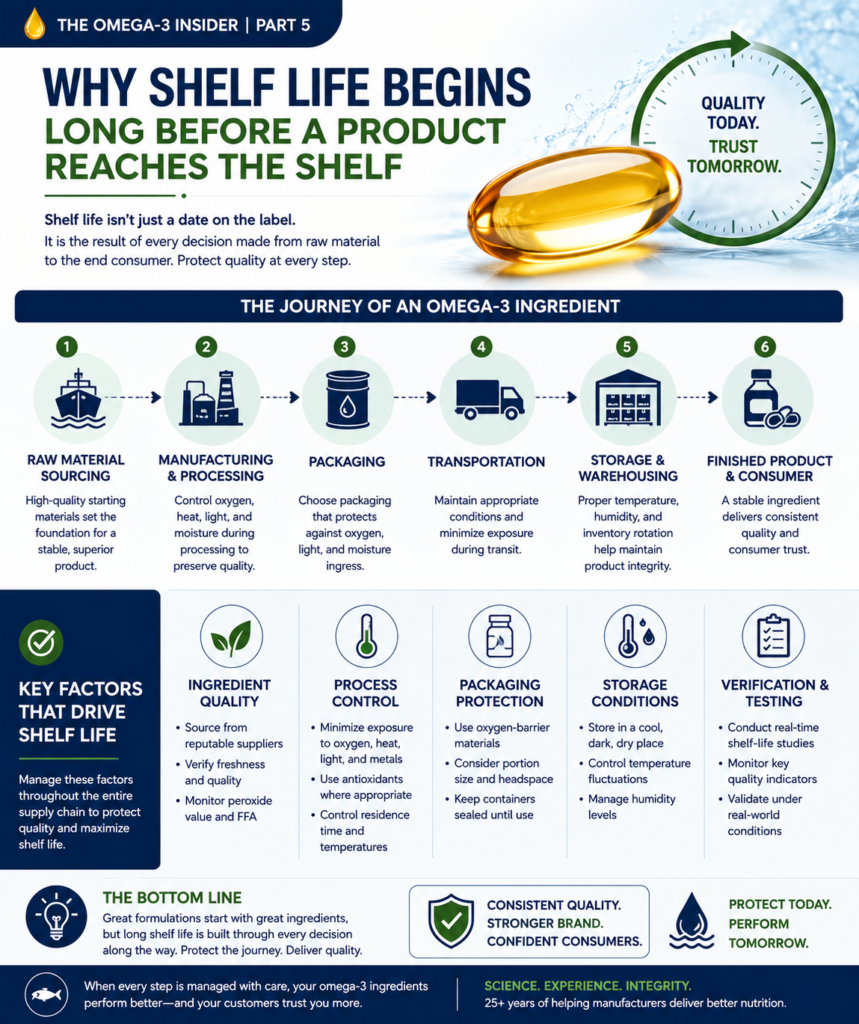
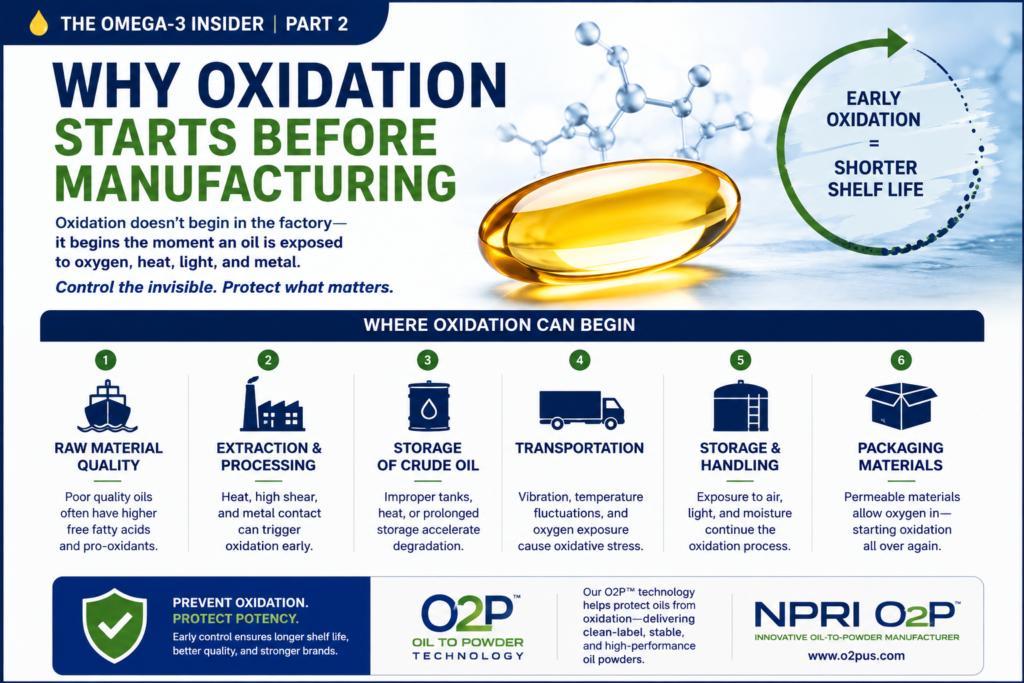
Why Shelf Life Begins Long Before a Product Reaches the Shelf
How O2P™ Technology Protects Oils from Oxidation
Shelf life begins long before a finished product reaches the consumer. Learn how raw material quality, manufacturing, packaging, storage, and transportation all contribute to product stability and long-term performance.
Oxidation begins long before oils reach the manufacturing line. Learn how raw material quality, processing, storage, transportation, and oxygen exposure can silently reduce stability, potency, and shelf life.
Oil powder may appear to dissolve, but the oil itself remains insoluble in water. Learn how emulsification helps keep tiny oil droplets suspended and why this distinction matters in formulation.
