
Liquid Oil vs. Oil Powder: The True Manufacturing Cost
Why more manufacturers are reconsidering the true cost of liquid oils versus oil powders.
The Question We Heard More Than Two Decades Ago
When we first introduced our Oil-to-Powder technology to the market, one of the most common questions we encountered was:
“Why should I pay more for an oil powder when I can purchase the liquid oil for considerably less?”
It was a reasonable question then, and it remains a reasonable question today.
On a price-per-kilogram basis, liquid oils generally cost less than their powdered equivalents. Converting an oil into powder requires additional ingredients, manufacturing processes, packaging, and quality control.
But over the years, we have noticed a change in how downstream manufacturers evaluate functional oil ingredients.
Increasingly, the conversation is moving beyond the initial purchase price and toward a much broader question:
What does it actually cost to incorporate that oil into a finished product?
The Hidden Cost of Handling Liquid Oils
Liquid oils have served the food, nutraceutical, and supplement industries for decades.
However, incorporating liquid oils into manufacturing operations can involve more than simply pouring an ingredient into a mixing vessel.
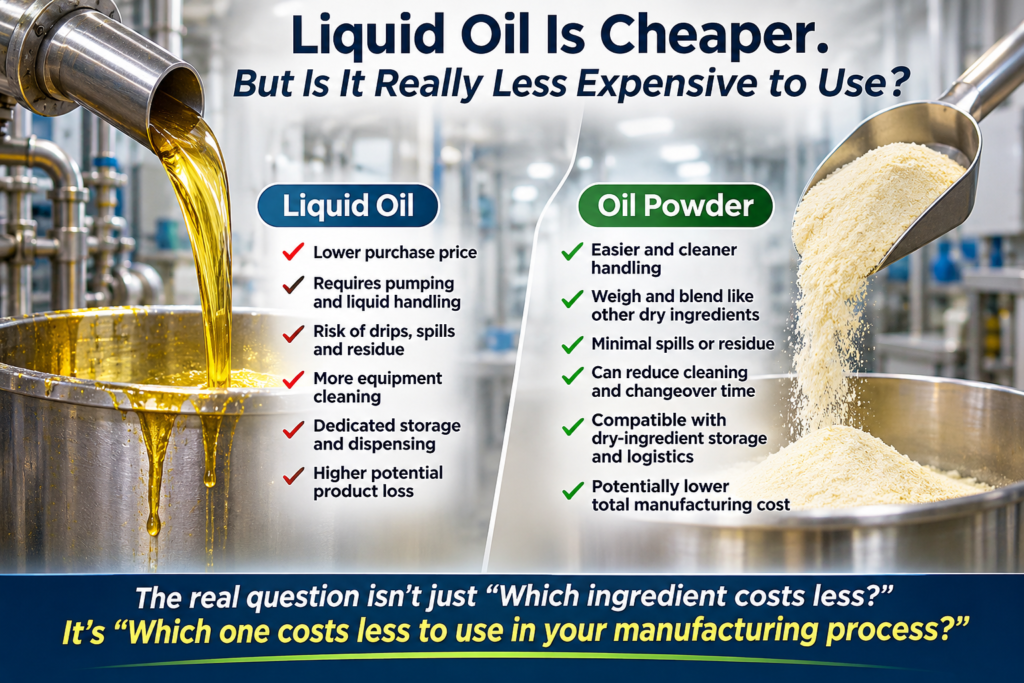
Depending on the application, manufacturers may require dedicated storage tanks, pumps, transfer lines, hoses, dispensing equipment, and specialized cleaning procedures.
And then there is the question of ingredient recovery.
How much oil remains inside a transfer line after dispensing? How much residue is left on the walls of a mixing vessel? What happens when oil drips, spills, or adheres to processing equipment?
Each of these situations can contribute to manufacturing losses.
Individually, those losses may appear insignificant. Across repeated production runs, however, they can become meaningful.
Why Powder Handling Can Be Simpler
For manufacturers already operating dry-blending facilities, oil powders may offer an attractive alternative.
Rather than introducing a separate liquid-handling operation, a properly formulated oil powder can be weighed, conveyed, and blended alongside other dry ingredients.
This can simplify material handling, reduce reliance on dedicated liquid-transfer equipment, and potentially shorten cleaning and changeover procedures.
There are practical considerations, of course. Powders must be managed for flowability, dust generation, moisture sensitivity, and proper dispersion.
Nevertheless, in suitable applications, oil powders can offer operational advantages that are not immediately apparent when comparing ingredient prices alone.
What About Transportation and Storage?
Transporting and storing liquid oils can require containers designed to prevent leakage and contamination.
Depending on the oil and application, drums, totes, tanks, or other specialized arrangements may be necessary.
Oil powders can often be packaged in sealed bags or cartons, making them compatible with established dry-ingredient storage and handling systems.
For manufacturers accustomed to receiving and processing dry ingredients, this can simplify logistics and inventory management.
However, oil powders also contain carrier materials. A powder with 50% oil loading requires two kilograms of finished powder to deliver one kilogram of oil.
Consequently, freight and storage costs must be evaluated on an equivalent oil-content basis. Powder is not automatically cheaper to transport in every situation.
The potential savings depend on the overall supply chain, packaging, equipment, and manufacturing process.
When the Lowest Ingredient Price Is Not the Lowest Production Cost
Consider two manufacturers producing the same functional nutritional product.
One purchases liquid oil at a lower price but must accommodate separate oil-storage, pumping, dispensing, and cleaning operations.
The other purchases oil in powder form at a higher ingredient price but incorporates it directly into an existing dry-blending process.
Which manufacturer has the lower total production cost?
The answer depends on the actual operating conditions.
A meaningful comparison should consider:
Ingredient cost at an equivalent active-oil dosage
Material handling and labor
Transfer losses and product recovery
Equipment cleaning and production downtime
Packaging, transportation, and storage
Overall manufacturing efficiency
The important point is that the lowest purchase price does not necessarily produce the lowest finished-product cost.
Does This Mean Oil Powder Should Replace Liquid Oil Everywhere?
Absolutely not.
Liquid oils remain appropriate and economical for many applications, particularly where manufacturers have efficient liquid-processing systems or require high concentrations of oil without additional carrier ingredients.
But what about companies producing powdered nutritional supplements, instant beverage mixes, functional foods, powdered meal replacements, and other dry formulations?
For these manufacturers, it may be worthwhile to reconsider whether liquid oil remains the most practical ingredient format.
A Different Way to Think About Functional Oils
At NPRI-O2P, LLC, we have spent more than two decades developing and manufacturing oil powders using our proprietary O2P™ Oil-to-Powder technology.
Our room-temperature conversion process transforms suitable liquid oils into water-dispersible powders without applying heat during the conversion process or chemically modifying the original oil.
We work with a variety of functional oils and carrier systems to develop powders suited to different manufacturing and formulation requirements.
Our objective is not to suggest that every liquid oil should become a powder.
Rather, it is to encourage product developers, purchasing professionals, and manufacturers to evaluate the complete economics of how an ingredient is handled and incorporated into their products.
Perhaps It’s Time to Ask a Different Question
More than two decades ago, manufacturers often asked us why oil powder costs more than liquid oil.
Today, we believe the more useful question is:
“Are we evaluating the price of the ingredient—or the total cost of using it?”
For manufacturers still handling functional oils exclusively in liquid form, the answer may reveal opportunities worth exploring.
NPRI-O2P, LLC
Manufacturer and developer of proprietary O2P™ Oil-to-Powder technology
https://o2pus.com
godfrey@o2pus.com
Need Help With Your Formulation?
Whether you’re developing a new oil powder, improving product stability, or solving formulation challenges, our technical team is ready to help. Contact us for formulation guidance, product recommendations, or sample requests.
Recommended Technical Articles
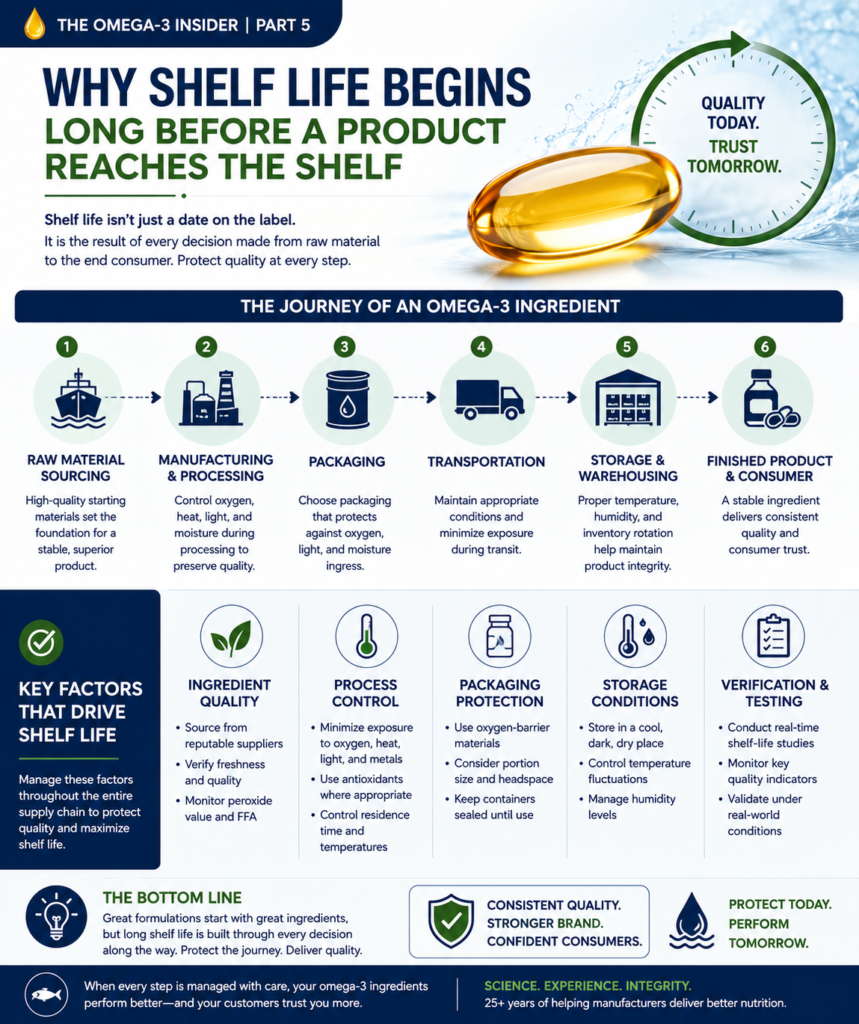
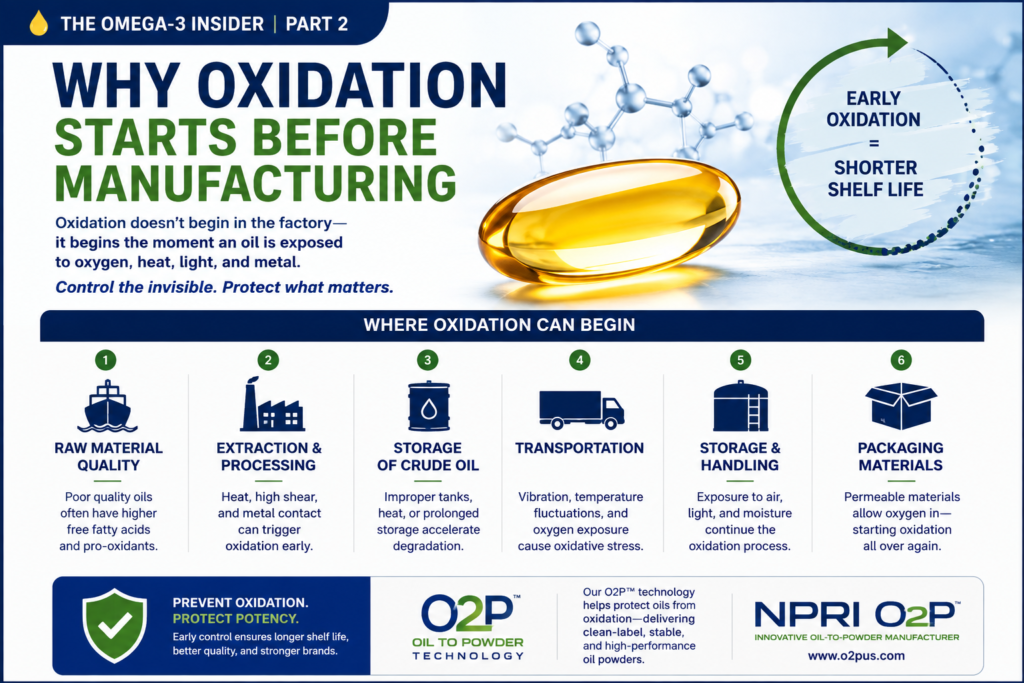
Why Shelf Life Begins Long Before a Product Reaches the Shelf
How O2P™ Technology Protects Oils from Oxidation
Shelf life begins long before a finished product reaches the consumer. Learn how raw material quality, manufacturing, packaging, storage, and transportation all contribute to product stability and long-term performance.
Oxidation begins long before oils reach the manufacturing line. Learn how raw material quality, processing, storage, transportation, and oxygen exposure can silently reduce stability, potency, and shelf life.
Liquid oils may cost less to purchase, but what about handling, spills, cleaning and storage? A closer look at the true cost of incorporating functional oils into finished products.