
DHA Algae Oil vs Fish Oil: Cost, Supply & Powder Technology
A New Perspective on Omega-3 Ingredient Sourcing, Cost, and Formulation Flexibility
For decades, fish oil has dominated the commercial market for long-chain omega-3 fatty acids, particularly EPA (eicosapentaenoic acid) and DHA (docosahexaenoic acid).
But changing supply conditions, fluctuating costs, and growing interest in alternative ingredient sources are prompting manufacturers to reconsider their options.
One increasingly attractive option is algae-derived DHA oil.
What makes this development particularly interesting is that DHA-rich algae oil may no longer need to be positioned as a premium-priced substitute for fish oil. Depending on the grade, concentration, and supply arrangement, it can be commercially competitive—and in some cases less expensive—when compared on the actual DHA content delivered.
For manufacturers developing nutritional supplements, functional foods, powdered beverages, and pet nutrition products, this deserves closer examination.
1. Why Algae Deserves More Attention
Fish obtain much of their marine omega-3 fatty acids through aquatic food webs ultimately supported by microorganisms, including microalgae.
Certain commercially cultivated microalgae can produce DHA-rich oils without requiring fish as the raw material.
This offers several potential advantages:
An alternative supply source that is less directly dependent on wild fish catches.
DHA-rich ingredient options for plant-based and fish-free formulations.
Controlled cultivation and production environments.
Opportunities to diversify omega-3 sourcing.
Compatibility with various nutritional and food applications, subject to appropriate ingredient qualifications.
However, not all algae oils are identical.
Their fatty acid compositions, processing characteristics, costs, and intended applications can differ considerably.
2. The Economics: Compare Cost per Gram of DHA, Not Cost per Kilogram of Oil
A common mistake in ingredient procurement is comparing the price of fish oil and algae oil solely by their cost per kilogram.
For manufacturers purchasing DHA as a nutritional ingredient, the more meaningful comparison is often the cost of the actual DHA delivered.
Consider two hypothetical ingredients:
| Ingredient | DHA concentration | Oil required to deliver 1 kg DHA |
|---|---|---|
| Fish oil | 20% | 5.0 kg |
| DHA-rich algae oil | 40% | 2.5 kg |
In this example, the DHA-rich algae oil requires only half as much oil to deliver the same quantity of DHA.
Of course, the final economic comparison also depends on the purchase price, regulatory suitability, quality specifications, and formulation requirements.
At NPRI-O2P, our current DHA-rich algae oil offering presents an especially interesting commercial opportunity: on a DHA-per-gram basis, it is presently more cost-competitive than certain conventional omega-3 fish oils available to us.
For manufacturers facing pressure to control formulation costs, that difference can be commercially significant.
3. DHA-Rich Algae Oil Is Not the Same as High-EPA Algae Oil
One important distinction is the fatty acid profile.
Many commercially available algae oils are primarily DHA-rich, with relatively low EPA content.
These oils may be attractive where DHA is the principal nutritional target.
High-EPA algae oils, including products containing substantial concentrations of both EPA and DHA, are also available.
However, these specialty grades are generally significantly more expensive in our current sourcing experience.
Therefore, manufacturers should distinguish between three formulation objectives:
DHA-focused products where high DHA content is the primary consideration.
Combined EPA/DHA products where both fatty acids are required.
EPA-focused products where a substantial EPA concentration is essential.
A high-DHA algae oil is not automatically a direct nutritional replacement for a fish oil containing substantial amounts of both EPA and DHA.
The correct choice depends on the intended fatty acid profile and the final product requirements.
4. Liquid Algae Oil or Algae Oil Powder?
Another important consideration is the physical form in which the ingredient will be incorporated.
Liquid algae oil can be suitable for softgels, liquid supplements, emulsified products, and certain food formulations.
However, manufacturers developing powdered products may encounter additional challenges when incorporating liquid oil directly into an existing dry blend.
These can include:
Powder flowability and processing consistency.
Oil distribution throughout the formulation.
Packaging and handling requirements.
Compatibility with dry-blending processes.
Oxidation management and shelf-life considerations.
This is where oil-to-powder technology becomes especially relevant.
5. O2P Technology: Converting Algae Oil into Functional Powder Ingredients
NPRI-O2P’s proprietary O2P oil-to-powder technology converts liquid oils into free-flowing powders using a room-temperature process designed to minimize exposure to oxygen.
Unlike conventional spray drying, our process does not rely on applying high temperatures to the oil during powder conversion.
The resulting oil powders are designed for dry formulation applications and can be made water-dispersible.
Importantly, water-dispersible does not mean water-soluble. The oil remains oil and disperses within the aqueous system rather than dissolving at the molecular level.
Our technology also offers considerable formulation flexibility.
Depending on the properties of the oil and the carrier materials, O2P can accommodate different oil-loading levels and carrier systems.
In certain applications, existing dry ingredients within a customer’s formulation may potentially serve as carriers for the oil.
This can reduce the need to introduce additional carrier ingredients, subject to technical evaluation.
Potential applications include:
Human Nutrition: Powdered omega-3 supplements, nutritional blends, functional beverage mixes, and specialized nutrition formulations.
Pet Nutrition: Powdered nutritional supplements, dry food applications, functional treats, and specialized pet formulations.
Food Manufacturing: Nutritionally enhanced food products, dry ingredient blends, and powdered food systems.
Product compatibility, fatty acid retention, oxidation stability, sensory performance, and shelf life should always be evaluated for the specific application.
6. Understanding the Limitations
Despite its advantages, algae oil is not necessarily the best choice for every application.
Manufacturers should consider several important factors.
Fatty acid profile: DHA-rich algae oil may not meet a formulation requiring substantial EPA.
Sensory characteristics: Different algae oils can exhibit characteristic flavors or odors that require evaluation.
Oxidative stability: DHA is highly unsaturated and remains susceptible to oxidation, regardless of whether it originates from fish or algae.
Cost: DHA-rich algae oils may be commercially attractive, while certain high-EPA or balanced EPA/DHA grades remain expensive.
Regulatory suitability: Ingredient source, manufacturing process, specifications, and intended use must be evaluated for each market and application.
Powder stability: Converting an oil into powder does not eliminate oxidation risk. Packaging, carrier selection, storage conditions, and validated shelf-life performance remain important.
A successful formulation requires balancing these considerations rather than focusing on any single advantage.
7. A Practical Alternative for Omega-3 Formulators
The question for manufacturers is no longer simply whether algae oil can provide DHA.
It can.
The more relevant questions are whether a particular algae oil meets the required fatty acid specifications, delivers competitive economics, fits the intended formulation, and can be supplied consistently.
For manufacturers requiring dry ingredient formats, the ability to convert algae oil into free-flowing powder adds another dimension to the evaluation.
NPRI-O2P supplies DHA-rich algae oil in liquid form and manufactures O2P algae oil powders for customers requiring dry formulation options.
We also offer specialty algae oil grades containing both EPA and DHA, subject to availability and formulation requirements.
Our typical lead time is approximately two to three weeks for liquid and powder products, subject to material availability, specifications, and order volume.
Conclusion: Evaluate the Omega-3 Source, Not Just the Tradition
Fish oil remains an important ingredient in the global omega-3 industry.
But DHA-rich algae oil merits consideration on its own technical and commercial advantages.
For some formulations, it may provide a more attractive combination of DHA concentration, sourcing flexibility, and cost efficiency.
And when supplied as an O2P oil powder, it can offer additional opportunities for manufacturers developing powdered nutritional and food products.
NPRI-O2P welcomes discussions with R&D scientists, formulators, and ingredient procurement professionals interested in evaluating algae-derived DHA oils and oil powders.
NPRI-O2P, LLC
Proprietary Oil-to-Powder Technology
Need Help With Your Formulation?
Whether you’re developing a new oil powder, improving product stability, or solving formulation challenges, our technical team is ready to help. Contact us for formulation guidance, product recommendations, or sample requests.
Recommended Technical Articles
Why Shelf Life Begins Long Before a Product Reaches the Shelf
How O2P™ Technology Protects Oils from Oxidation
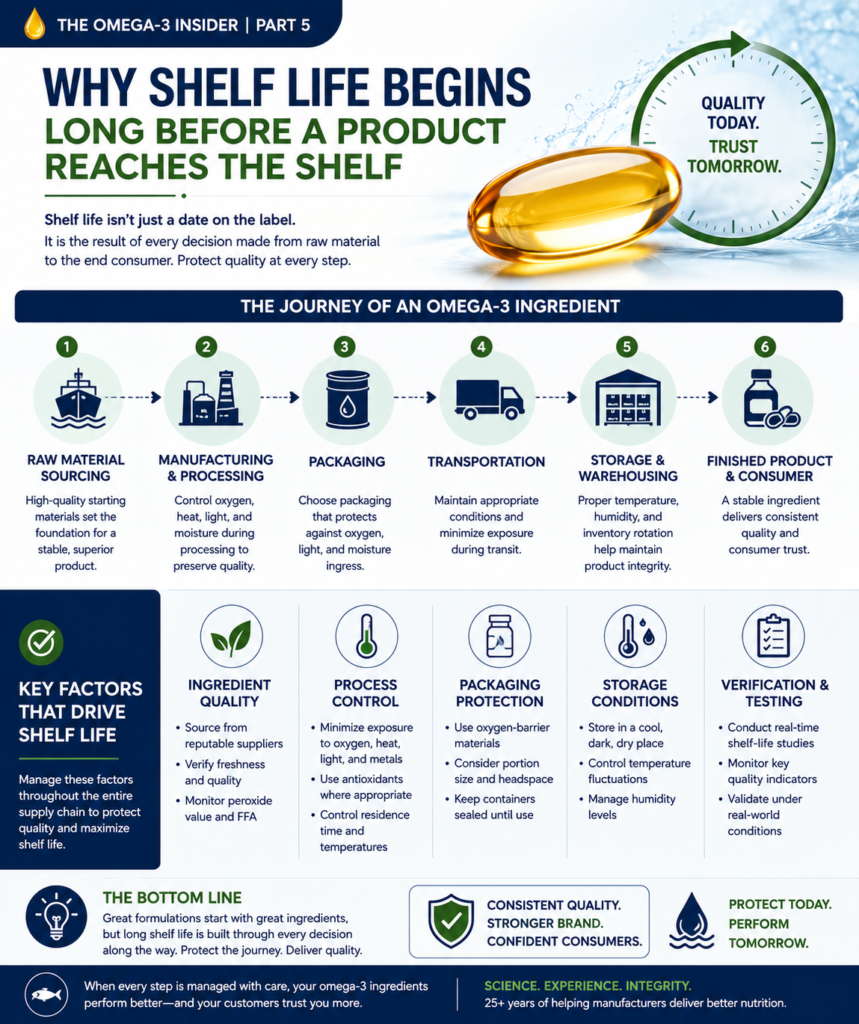
Shelf life begins long before a finished product reaches the consumer. Learn how raw material quality, manufacturing, packaging, storage, and transportation all contribute to product stability and long-term performance.
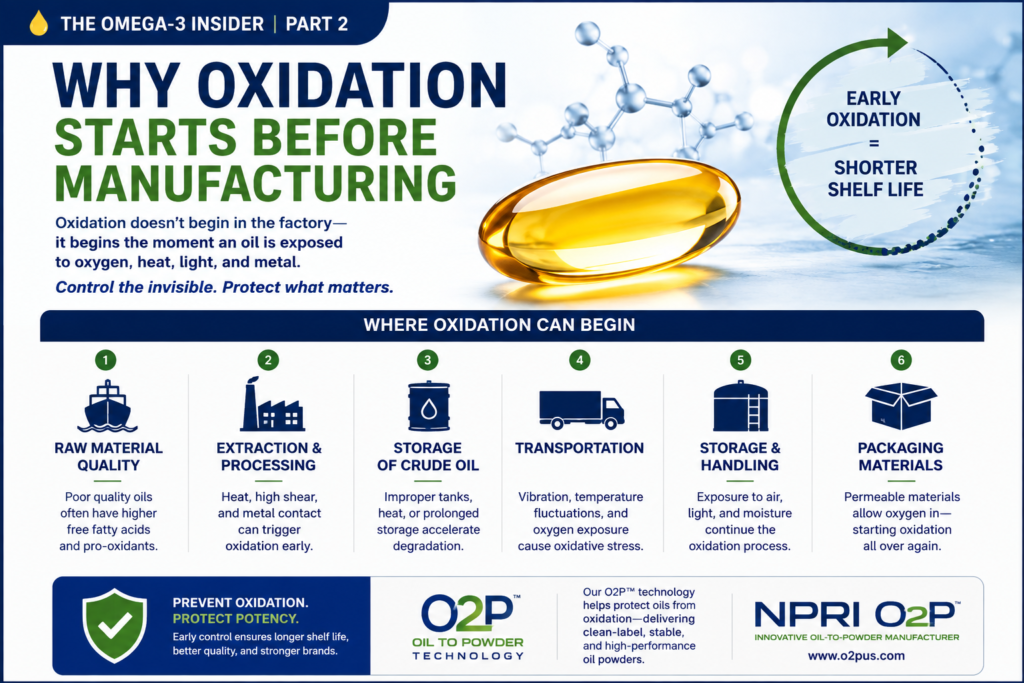
Oxidation begins long before oils reach the manufacturing line. Learn how raw material quality, processing, storage, transportation, and oxygen exposure can silently reduce stability, potency, and shelf life.
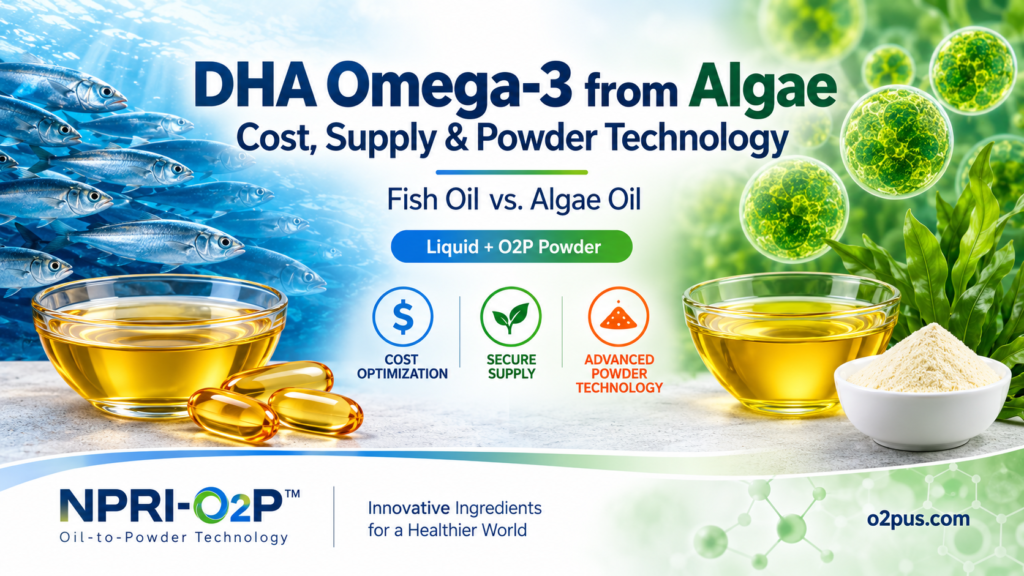
Discover the advantages and limitations of DHA-rich algae oil, its competitive cost per gram of DHA, and how O2P technology transforms algae oil into free-flowing powders for human nutrition, pet nutrition, and food manufacturing.