
The Hidden Cost of Oxidation in Nutritional Oils
Oxidation Costs More Than Most Manufacturers Realize
Oxidation is often viewed simply as a chemical reaction that affects fats and oils. In reality, it can have far-reaching consequences throughout the manufacturing process, influencing product quality, customer satisfaction, inventory life, and ultimately profitability.
For manufacturers producing nutritional supplements, functional foods, beverages, and pet nutrition products, oxidation is one of the most significant—and often underestimated—causes of product degradation.
The financial impact extends far beyond the loss of oil potency, affecting manufacturing efficiency, product quality, customer satisfaction, and long-term profitability.
The True Cost of Oxidation
Once oxidation begins, manufacturers may experience:
- Reduced EPA and DHA potency
- Loss of sensitive vitamins and bioactive compounds
- Off-flavors and undesirable odors
- Shorter shelf life
- Increased customer complaints
- Product returns
- Greater manufacturing waste
- Reduced brand confidence
- Higher reformulation costs
Many of these costs remain hidden because they occur gradually throughout the product’s life cycle.
Oxidation Begins Earlier Than Most People Think
Many manufacturers assume oxidation begins after a product reaches the consumer.
In reality, oxidation may begin much earlier—during raw material handling, ingredient storage, manufacturing, transportation, or packaging.
Every exposure to oxygen, elevated temperature, moisture, light, or metal contaminants can contribute to the gradual degradation of sensitive oils.
By the time the finished product reaches the customer, much of the damage may have already occurred.
Prevention Is More Cost-Effective Than Correction
Improving shelf life should not begin with stronger packaging alone.
It begins with protecting sensitive ingredients from unnecessary exposure throughout the manufacturing process.
Manufacturers that focus on prevention often experience:
- Better product consistency
- Longer shelf life
- Improved customer satisfaction
- Reduced product waste
- Lower overall production costs
- Stronger brand reputation
A More Comprehensive Approach
Protecting sensitive oils requires more than simply adding antioxidants.
Successful manufacturers evaluate every step of the production process—from raw material selection and ingredient handling to processing methods, packaging, storage, and transportation.
Each stage plays an important role in preserving ingredient quality.
The cost of oxidation is rarely measured by one failed batch.
It is measured through gradual losses in product quality, customer confidence, manufacturing efficiency, and long-term profitability.
Understanding where oxidation begins—and implementing strategies to minimize its impact—Manufacturers who understand where oxidation begins—and implement strategies to minimize its impact—are better positioned to deliver higher-quality products, strengthen customer confidence, and reduce long-term manufacturing costs.
Need Help With Your Formulation?
Whether you’re developing a new oil powder, improving product stability, or solving formulation challenges, our technical team is ready to help. Contact us for formulation guidance, product recommendations, or sample requests.
Recommended Technical Articles
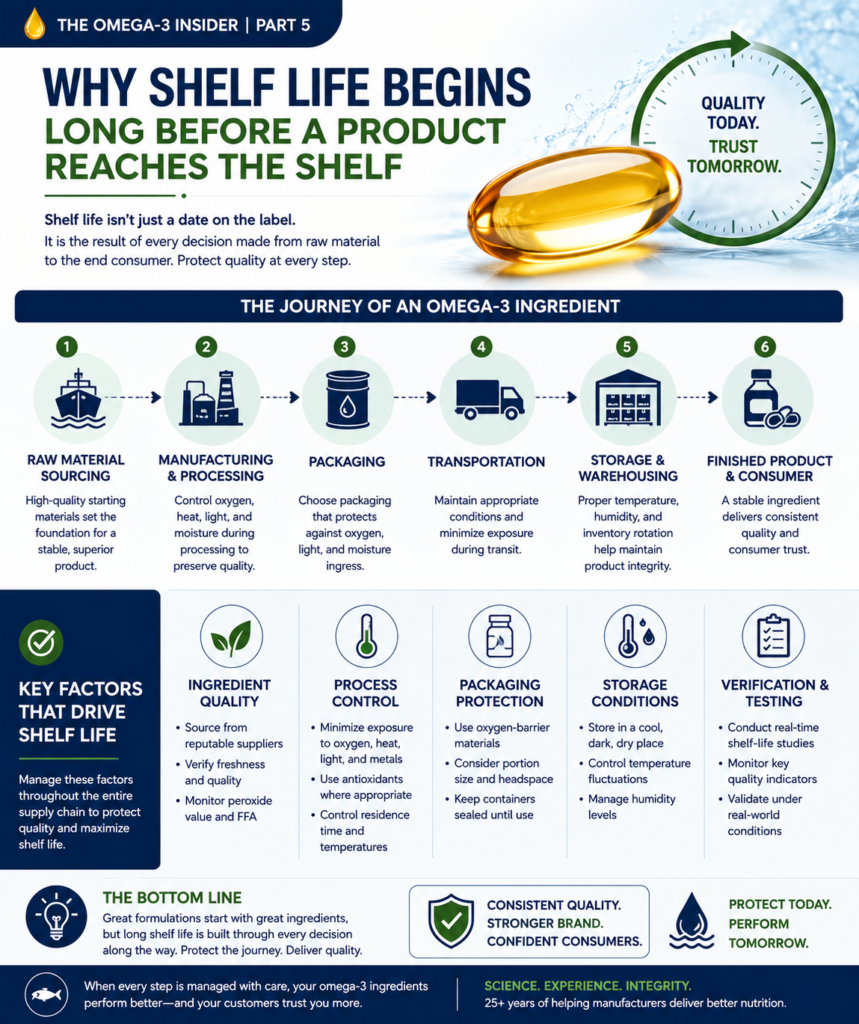
Why Shelf Life Begins Long Before a Product Reaches the Shelf
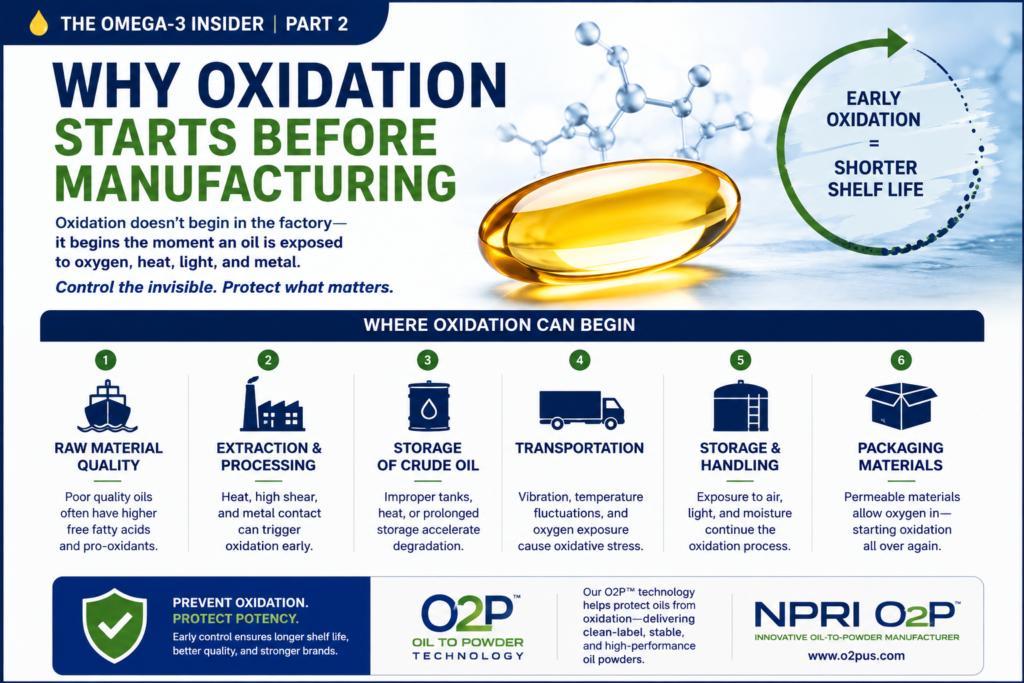
How O2P™ Technology Protects Oils from Oxidation
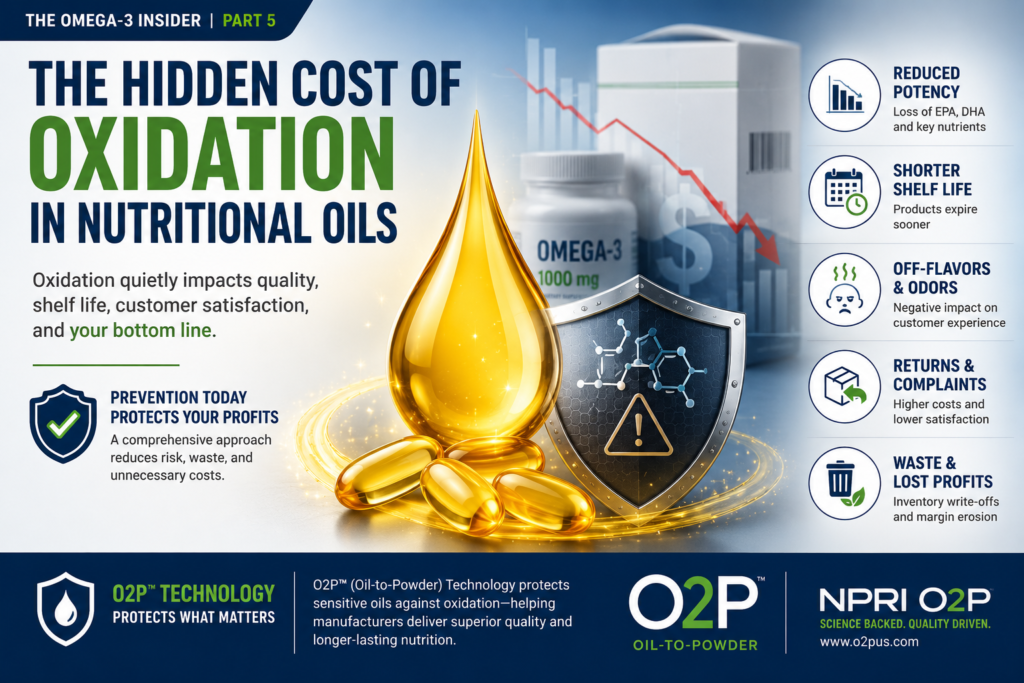
The Hidden Cost of Oxidation in Nutritional Oils
Shelf life begins long before a finished product reaches the consumer. Learn how raw material quality, manufacturing, packaging, storage, and transportation all contribute to product stability and long-term performance.
Oxidation begins long before oils reach the manufacturing line. Learn how raw material quality, processing, storage, transportation, and oxygen exposure can silently reduce stability, potency, and shelf life.
Discover how oxidation quietly reduces product quality, shelf life, customer satisfaction, and long-term profitability—and why preventing oxidation is more cost-effective than correcting it later.
