
Why Conventional Spray Drying May Not Be the Best Choice for Sensitive Oils
Heat Can Change More Than Just Moisture
Spray drying has been one of the industry’s most widely used technologies for converting liquid oils into dry powders. The process is fast, economical, and well established. However, when working with highly sensitive nutritional oils, manufacturers should carefully evaluate whether an alternative processing technology can provide additional benefits.
Although the oil droplets experience elevated temperatures only briefly during spray drying, inlet air temperatures commonly range from approximately 150°C to over 220°C, while outlet temperatures are typically between 50°C and 90°C depending on the formulation and operating conditions.
For oils rich in omega-3 fatty acids, botanical extracts, essential oils, and other delicate lipids, protecting molecular integrity is often more important than simply producing a free-flowing powder.
What Happens When Sensitive Oils Are Heated?
Unsaturated fatty acids contain double bonds that are naturally susceptible to oxidation. Elevated temperatures can accelerate oxidation:
- Loss of EPA and DHA potency
- Formation of oxidation by-products
- Reduction in nutritional value
- Development of off-flavors and odors
- Shorter shelf life
- Reduced product stability during storage
While antioxidants and protective wall materials can reduce some of these effects, they cannot completely eliminate the impact of oxidation once it has begun.
Is Spray Drying Always the Wrong Choice?
Not at all.
Spray drying remains an excellent manufacturing process for many food ingredients, flavors, proteins, carbohydrates, and numerous nutritional products. It is capable of producing high-quality powders when properly formulated and controlled.
The question is not whether spray drying works.
The more important question is whether it represents the optimum technology for every type of sensitive oil.
Manufacturers working with premium omega-3 oils, specialty lipids, and high-value nutritional ingredients often evaluate alternative processing technologies designed specifically to minimize thermal stress.
An Alternative Approach
O2P™ (Oil-to-Powder) Technology was developed using a fundamentally different philosophy.
Instead of relying on elevated drying temperatures to remove moisture, O2P™ converts liquid oils into stable, free-flowing powders through a proprietary process that avoids exposing the oil to high processing temperatures.
By minimizing thermal stress during powder production, manufacturers may better preserve the original characteristics of sensitive oils while improving handling, blending, transportation, and formulation flexibility.
Choosing the Right Technology
Every application is different.
Spray drying has earned its place as one of the world’s most important powder manufacturing technologies and continues to serve countless industries successfully.
However, when the ingredient itself is extremely sensitive to heat and oxidation, manufacturers should carefully evaluate whether a lower-temperature process can provide additional benefits in product stability, nutritional retention, and shelf life.
Selecting the proper powder manufacturing technology is one of the most important decisions product developers can make to preserve ingredient quality, stability, and long-term product performance.
Producing a powder is only one part of the equation.
Preserving the quality, stability, nutritional value, and functionality of the original oil is equally important. As consumer demand for premium nutritional ingredients continues to grow, selecting the most appropriate powder manufacturing technology becomes an increasingly important decision for product developers worldwide.
Need Help With Your Formulation?
Whether you’re developing a new oil powder, improving product stability, or solving formulation challenges, our technical team is ready to help. Contact us for formulation guidance, product recommendations, or sample requests.
Recommended Technical Articles
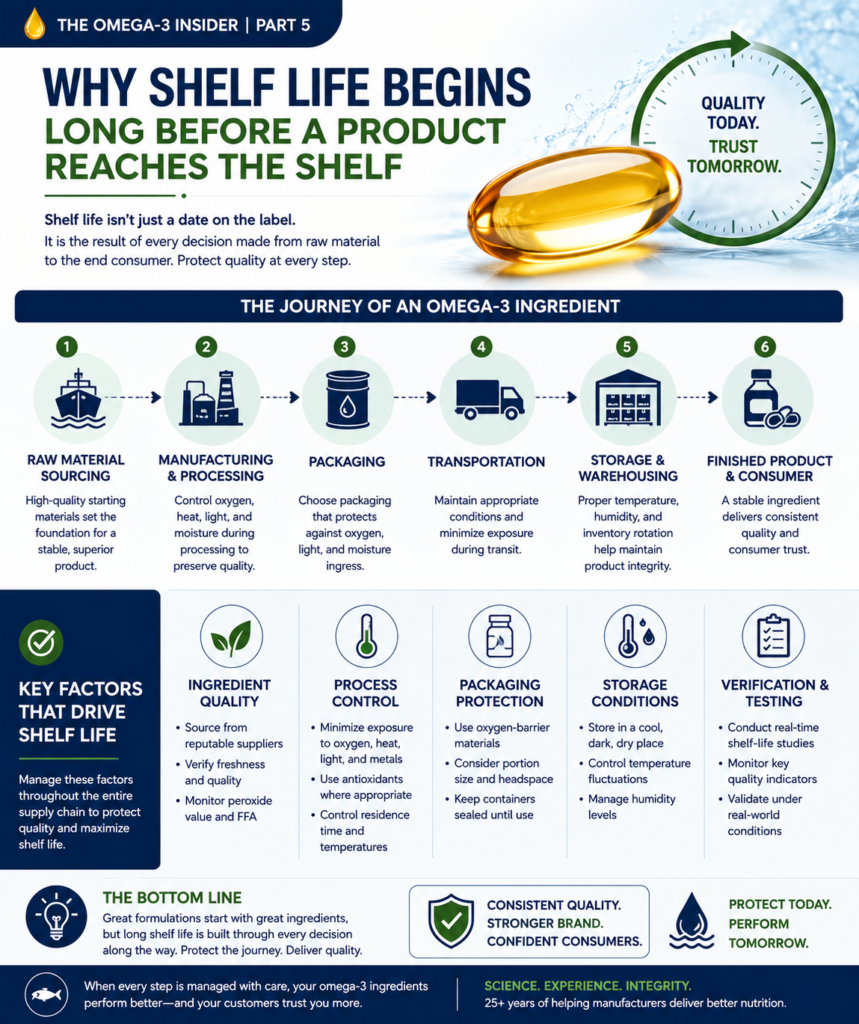
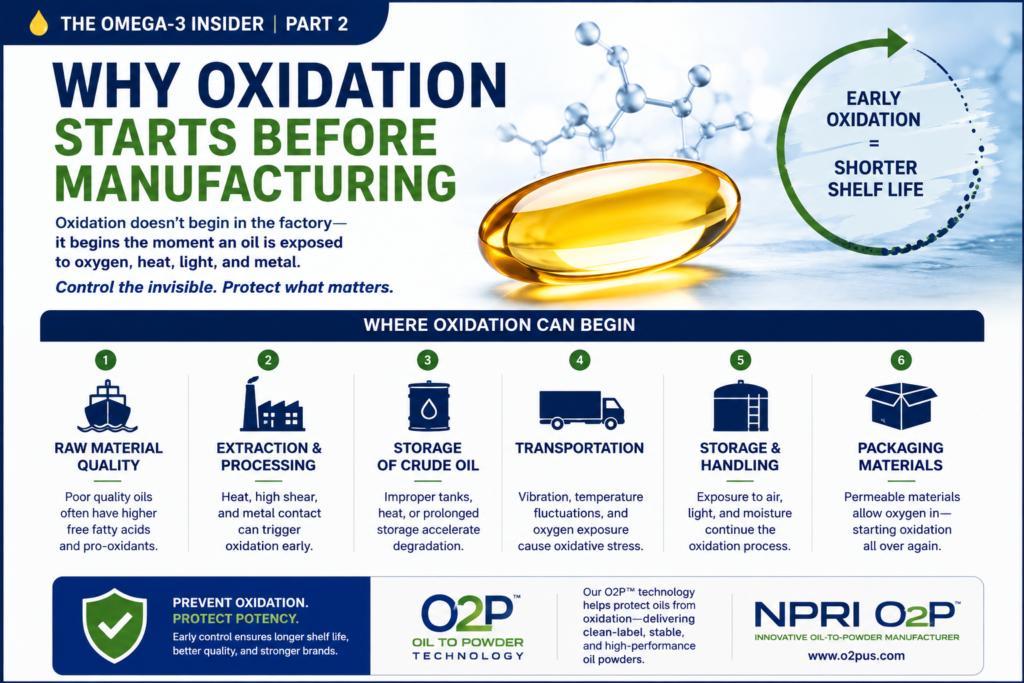
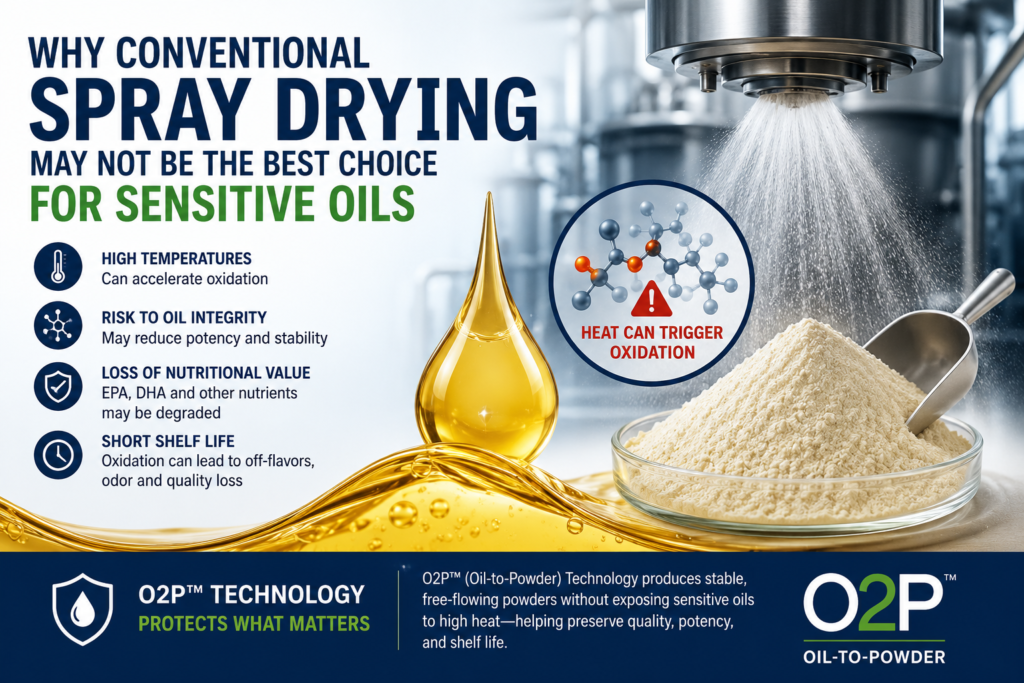
Why Shelf Life Begins Long Before a Product Reaches the Shelf
How O2P™ Technology Protects Oils from Oxidation
Why Spray Drying May Not Be the Best Choice for Sensitive Oils
Shelf life begins long before a finished product reaches the consumer. Learn how raw material quality, manufacturing, packaging, storage, and transportation all contribute to product stability and long-term performance.
Oxidation begins long before oils reach the manufacturing line. Learn how raw material quality, processing, storage, transportation, and oxygen exposure can silently reduce stability, potency, and shelf life.
Why Spray Drying May Not Be the Best Choice for Sensitive Oils
